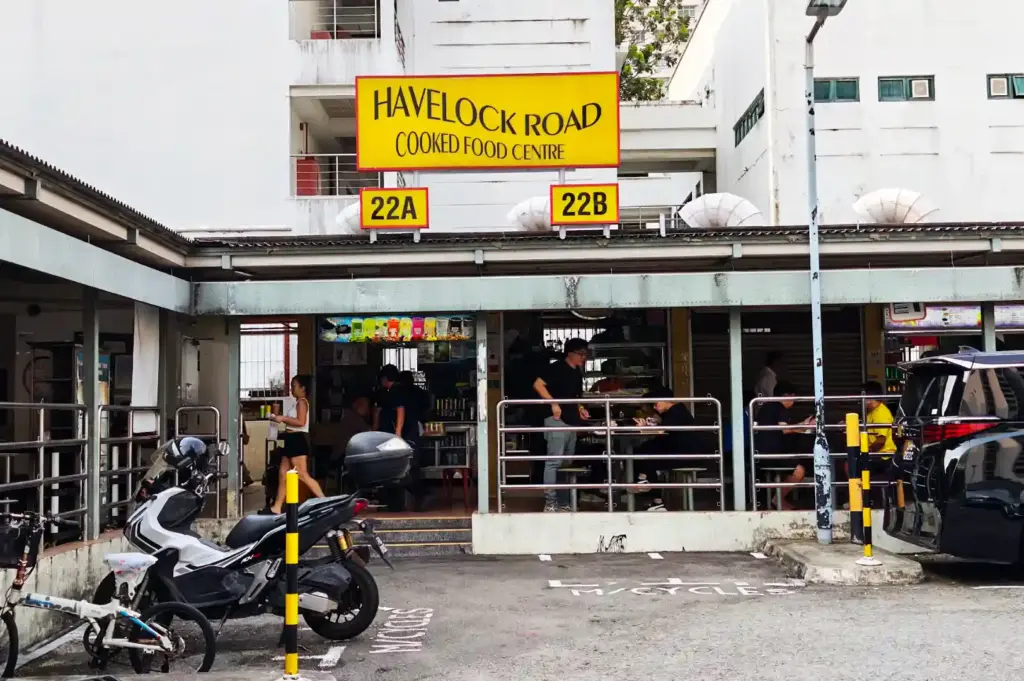
The first time I came to Havelock Road Cooked Food Centre, it was for a plate of char kway teow and nothing else. I stayed for two more dishes. Then I came back the following week, and the week after that. Over the years, I’ve eaten my way through much of this L-shaped hawker centre on weekday mornings, usually with a damp tissue packet on the table and a taxi uncle eating quietly beside me.
It would be easy to write about Havelock food as something preserved from another time. Some stalls have been cooking for decades, serving recipes that regular customers know by heart. There is comfort in that familiarity, especially in Singapore, where restaurants can open and disappear so quickly. But nostalgia alone doesn’t make a good meal.
Havelock Road Cooked Food Centre, at 22A Havelock Road, Singapore 161022, is a modest neighbourhood hawker centre with around 30 stalls. Its distinctive L-shaped layout, open-air tables, and steady mix of residents, office workers, and taxi drivers give it a lived-in atmosphere.
Havelock Food at a Glance: What to Eat at the Cooked Food Centre
Prices are based on published examples and may change. All seven stalls are located within Havelock Road Cooked Food Centre. Individual opening hours and rest days differ.
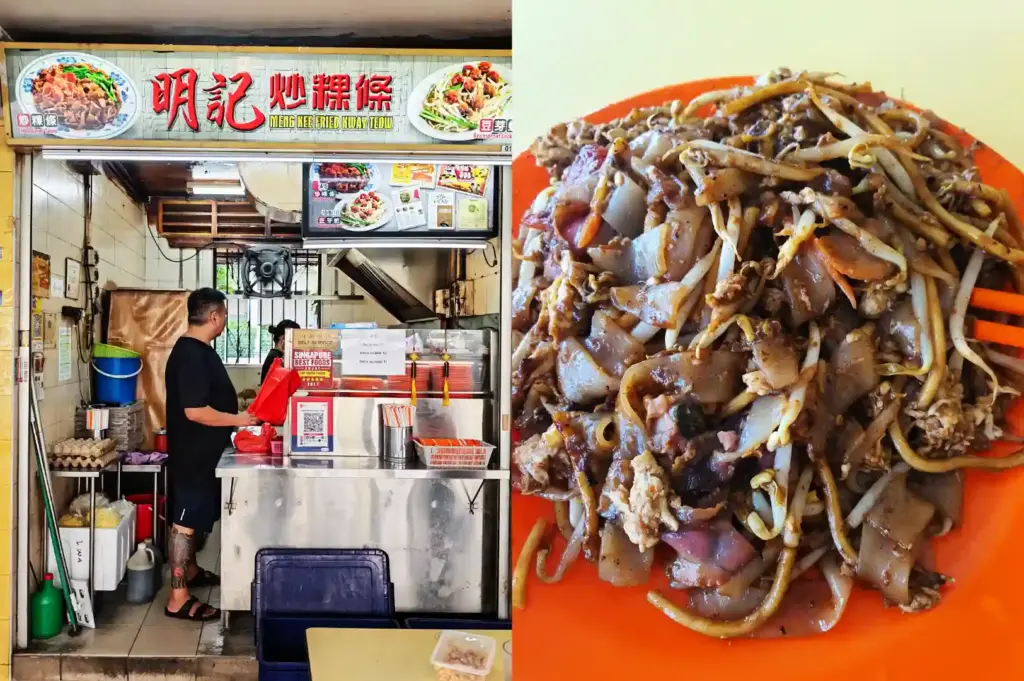
1. Meng Kee Fried Kway Teow: Old School Wok Cooking That Still Delivers
Location: #01-07, Havelock Road Cooked Food Centre
Nearest MRT: Tiong Bahru, approximately 4–7 minutes’ walk
Price: S$4–6
Opening hours: Approximately 9am–3:30pm, Monday to Saturday; closed Sunday
You hear Meng Kee before you reach the stall. The scrape of a metal ladle against the wok, the hiss of noodles meeting hot oil, and the occasional burst of smoke tell you what’s happening behind the counter. Meng Kee has been around for more than four decades, with the cooking continued by the next generation of the family. Its appeal lies in familiar ingredients handled with the confidence that comes from repetition.
The char kway teow combines flat rice noodles, yellow noodles, bean sprouts, egg, Chinese sausage or lup cheong, cockles, and pork lard. Everything is tossed over high heat and coated in a dark, savoury-sweet sauce. That high-heat cooking gives the fried kway teow its characteristic wok hei, the lightly smoky aroma that lingers after a mouthful.
What to Order and What to Expect
The S$5 portion has been generous enough on my visits that ordering the largest plate feels unnecessary unless I’m particularly hungry. There’s a satisfying mix of savoury sauce, slightly sweet lup cheong, and occasional crisp pieces of pork lard.
Still, Meng Kee’s darker, sweeter style won’t appeal to everyone. Diners who prefer pale, lightly seasoned char kway teow may find the sauce too assertive. Each plate is fried individually, so queues can move slowly during peak hours.
When to Visit
Arrive shortly after the morning opening if you want to avoid the busiest lunch crowd.
My recommendation: Start with the S$5 portion. The wok fragrance may be the first thing you notice, but pay attention to the cockles. Their tenderness says just as much about the cooking.
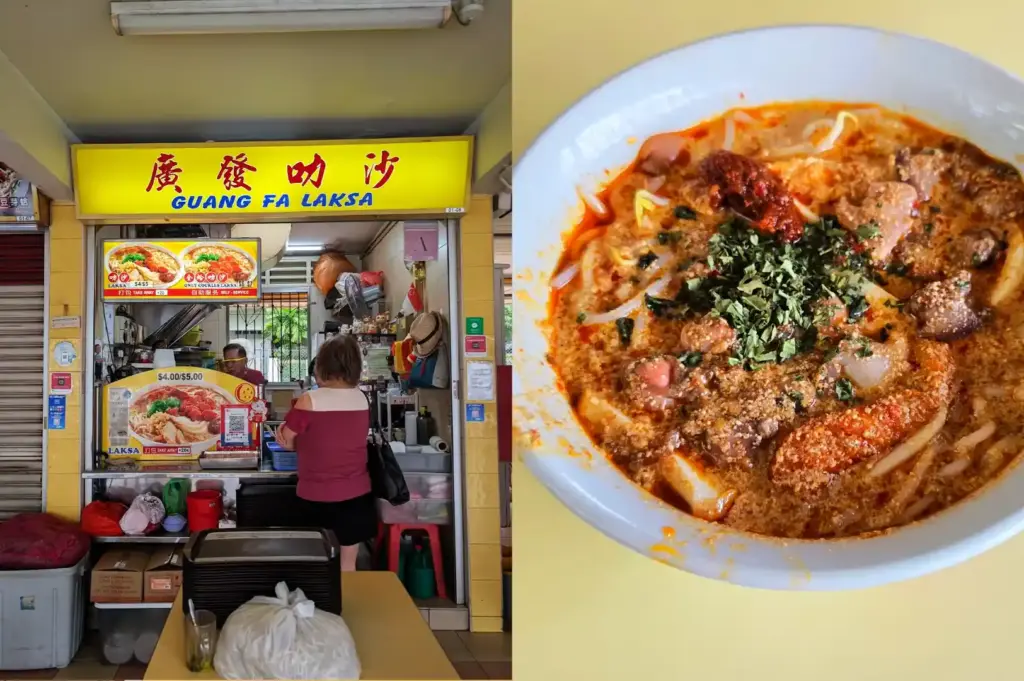
2. Guang Fa Laksa: A Cockle Lover's Bowl at Havelock Road Food Centre
Location: #01-08, Havelock Road Cooked Food Centre
Nearest MRT: Tiong Bahru, approximately 4–7 minutes’ walk
Price: S$4–7
Opening hours: Approximately 8am–1:30pm; generally closed Wednesday and Sunday
At many laksa stalls, cockles feel like an afterthought. You search through the noodles and find a few buried beneath the fish cake. At Guang Fa Laksa, they’re part of the attraction. The regular bowl contains thick bee hoon, bean sprouts, fish cake, tau pok, cockles, and sambal in a rich orange-red gravy.
What makes the broth interesting is its savoury character. Dried shrimp brings an earthy seafood aroma, while chilli provides warmth that builds as you eat. The coconut element doesn’t overwhelm the other flavours. Instead, the gravy allows the dried shrimp, shellfish, and sambal to remain noticeable.
What to Order and What to Expect
The standard laksa costs approximately S$4–5 and gives you the full combination of noodles, fish cake, tau pok, and cockles. For something more distinctive, there’s the Only Cockles Laksa, previously priced around S$6–7.
I’ve had a bowl here with a remarkably generous amount of plump cockles, close to twenty of them. Their briny flavour and slight sweetness worked well against the stronger chilli gravy. It’s a satisfying combination if shellfish is your favourite part of laksa. However, diners who prefer an especially creamy coconut broth may find Guang Fa’s savoury and spice-forward character less comforting.
When to Visit
Guang Fa is primarily a morning and early-lunch stall. Arriving before 11am is sensible, particularly if you want the cockle-heavy version.
My recommendation: Choose the Only Cockles Laksa if you’re here specifically for shellfish. Otherwise, start with the regular bowl to appreciate how the noodles, fish cake, tau pok, and gravy work together.
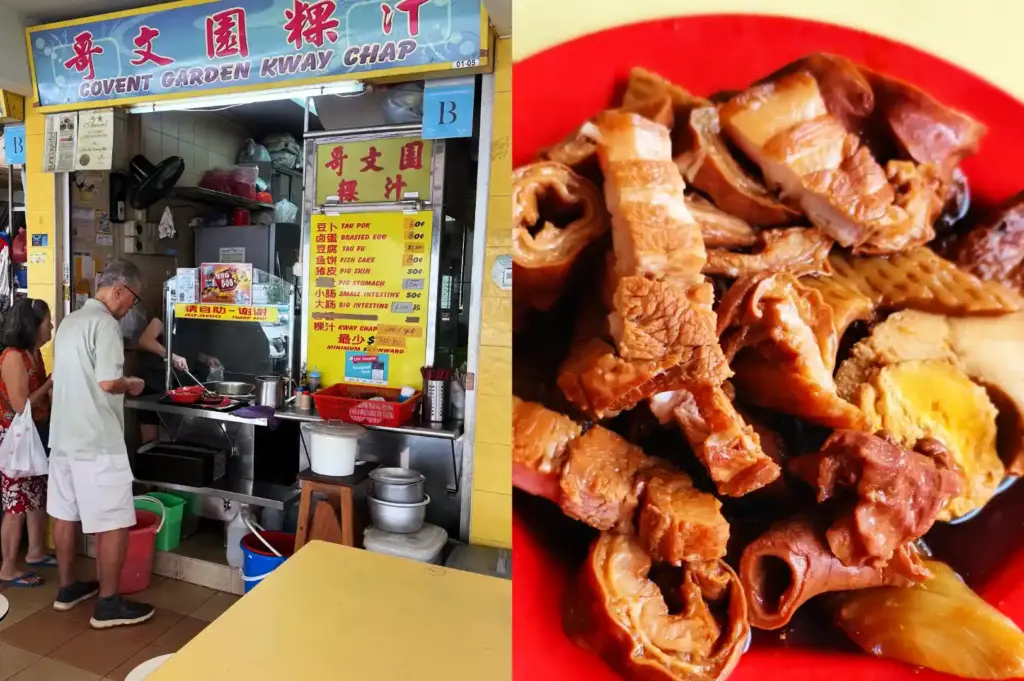
3. Covent Garden Kway Chap: The Patient Art of Braised Pork and Offal
Location: #01-05, Havelock Road Cooked Food Centre
Nearest MRT: Tiong Bahru, approximately 4–7 minutes’ walk
Price: From approximately S$3.50, depending on ingredients
Opening hours: Tuesday to Saturday mornings until around 1:30pm; closed Monday and Sunday
There is something patient about good kway chap. It doesn’t arrive smoking from a wok or covered in bright chilli. Instead, you get broad rice noodle sheets in a lightly seasoned broth, accompanied by braised ingredients that have spent hours absorbing flavour.
Covent Garden Kway Chap has roots dating back to the early 1960s and remains associated with the family behind its original cooking. The stall’s appeal lies in its careful preparation of pork offal, especially the intestines, alongside pork belly, pork skin, braised egg, and tau pok.
What to Order and What to Expect
Unlike a fixed rice plate, kway chap lets you build a meal from individual ingredients. My preferred combination includes intestines, pork belly, tau pok, and egg. The intestines should be clean-tasting and tender without an overpowering smell. Pork belly adds richness, while the braised egg offers a firmer contrast.
But it’s the tau pok that I find myself enjoying most. Its porous texture absorbs the gravy, giving every bite a soft, spongy richness against the silky kway. Basic portions are inexpensive, but choosing several extras can increase the total quickly.
When to Visit
Come for breakfast or an early lunch. Some ingredients may sell out before the published closing time.
My recommendation: Build a small combination rather than ordering everything. Comparing how the pork belly, intestines, tau pok, and egg absorb the same gravy is the most interesting part of the meal.
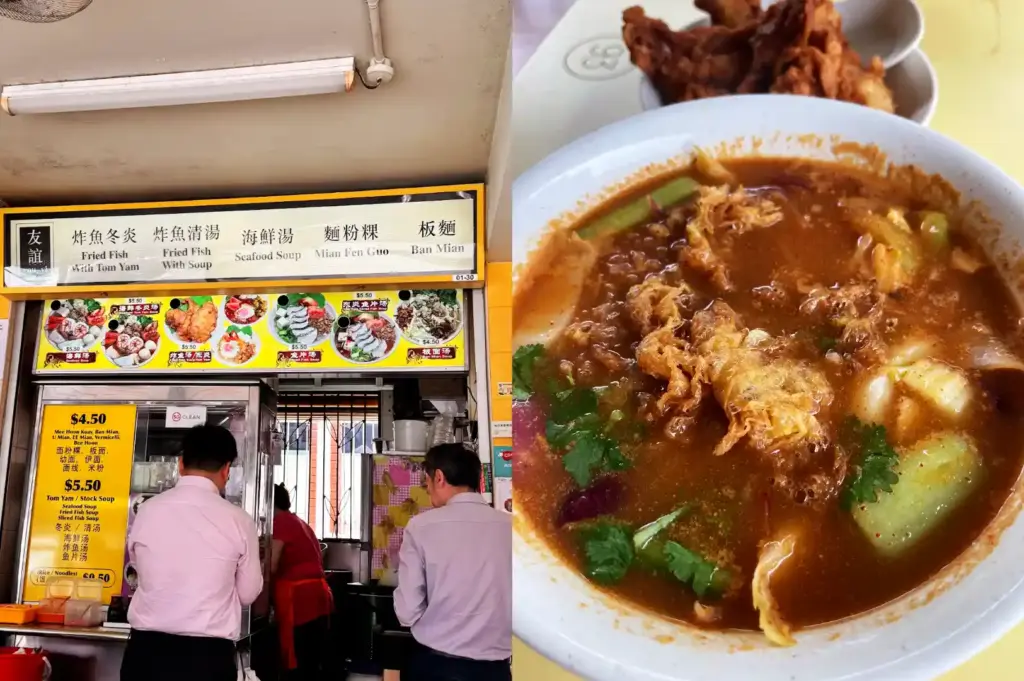
4. You Yi Fish Soup: Crisp Fried Fish and a Tom Yum Lunch Worth Planning For
Location: #01-30, Havelock Road Cooked Food Centre
Nearest MRT: Tiong Bahru, approximately 4–7 minutes’ walk
Price: Around S$4.50–5 for popular soup dishes
Opening hours: Approximately 9:30am–4pm on weekdays; generally closed Saturday and Sunday
You Yi Fish Soup sits towards the far end of the hawker centre, where the lunchtime queue is often the easiest way to recognise it. Fish soup is common throughout Singapore, but You Yi gives diners several ways to approach it. There’s clear fish soup for a lighter meal, seafood soup with additional ingredients, and the popular Tom Yum Fried Fish Soup for something sharper.
The tom yum broth carries a tangy, spicy flavour that cuts through the richness of the fried fish. What makes the dish particularly satisfying is the option of having the fish served separately from the soup. If your weekday lunch needs to stay closer to the office, read this another starting point for a time-conscious meal.
What to Order and What to Expect
The Tom Yum Fried Fish Soup is the natural starting point if you enjoy spicy, sour flavours. For something gentler, the seafood soup offers a more comforting alternative. Depending on the order, it can include sliced fish, prawns, fishballs, tofu, tomato, vegetables, and minced meat.
These ingredients make the bowl feel substantial without needing a thick, milky broth. I’ve learned not to underestimate the queue here. Each meal is cooked to order, and arriving during the busiest lunch period can turn a simple fish soup fix into a longer wait than expected.
When to Visit
A weekday visit between 10am and 11am is generally more practical than arriving during peak lunch hours.
My recommendation: Pair the Tom Yum Fried Fish Soup with yam rice if available. Keep the fish separate until eating so the crisp batter doesn’t disappear into the broth.
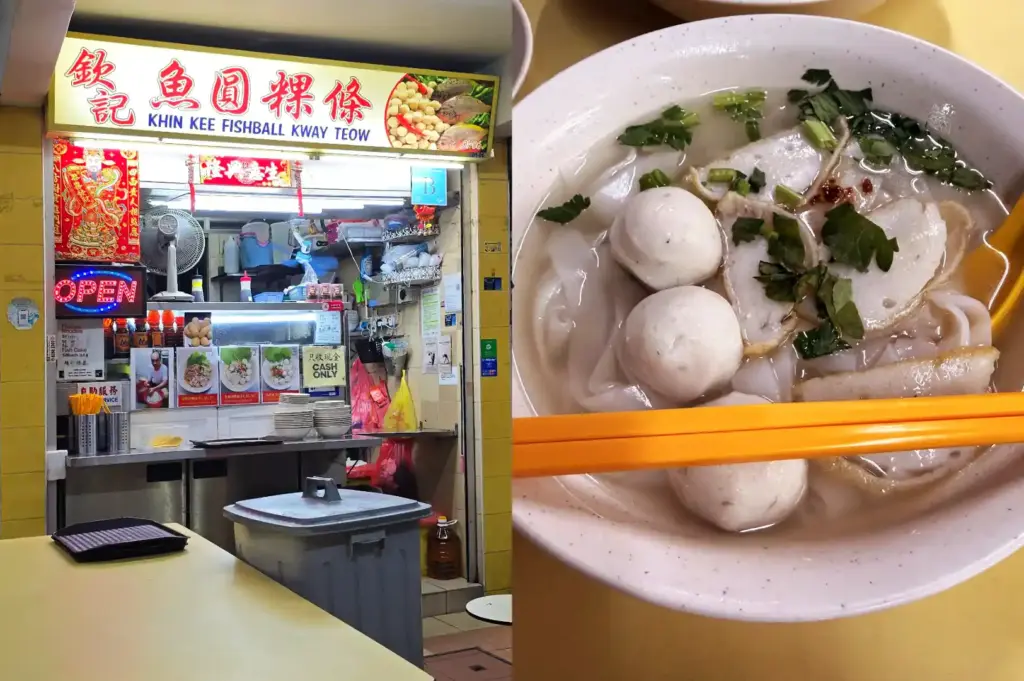
5. Khin Kee Fishball Kway Teow: When Simple Fishball Noodles Get the Details Right
Location: #01-06, Havelock Road Cooked Food Centre
Nearest MRT: Tiong Bahru, approximately 4–7 minutes’ walk
Price: S$4–6
Opening hours: Morning trading from around 7:30am; closing times vary. Published listings differ on rest days, so verify before visiting.
After dark char kway teow, spicy laksa, and rich braising gravy, Khin Kee feels like a quieter meal. Its menu centres on fishball noodles, mee pok, and kway teow, served dry or in soup. The dry mee pok is particularly good for judging the basics.
The noodles should have enough spring to resist the bite without becoming hard. The chilli and vinegar need to season the strands rather than overwhelm the fishballs. Khin Kee generally takes a more restrained approach to seasoning.
What to Order and What to Expect
I usually begin with the dry mee pok, tossed in chilli and a measured amount of vinegar. The noodles carry enough seasoning to remain interesting, but the flavour doesn’t depend entirely on sauce. On one visit, my dry noodles were a little oilier than I would have preferred. It’s a reminder that even simple dishes can vary from bowl to bowl.
The fishball kway teow soup offers another experience. Its broader noodles sit in a lighter broth, making it suitable for anyone who prefers a gentler breakfast. If you enjoy richly seasoned bak chor mee or minced meat noodles with fried shallots and pork lard, Khin Kee may feel comparatively understated. That’s also part of its appeal.
When to Visit
Morning is a good time to visit, especially if you’re comparing multiple stalls. Opening-hour listings have not been entirely consistent, so I wouldn’t plan a late dinner here without confirming the schedule.
My recommendation: Start with the dry mee pok, then taste one fishball on its own. You’ll find out whether the fish flavour holds up without the chilli and vinegar doing all the work.
6. Hong Kong Jin Tian Roast Meat: Crackling, Char Siew, and Cantonese Comfort
Location: #01-03, Havelock Road Cooked Food Centre
Nearest MRT: Tiong Bahru, approximately 4–7 minutes’ walk
Price: From around S$5 for rice or noodle dishes
Opening hours: Approximately 7:30am–4pm, Tuesday to Sunday; closed Monday
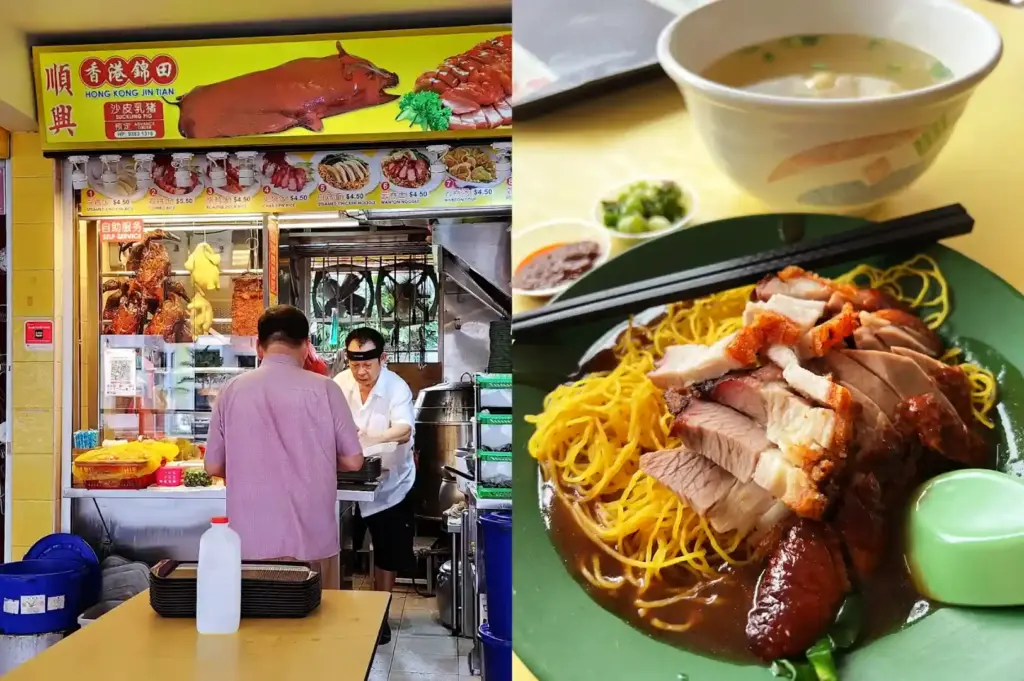
Hong Kong Jin Tian brings a different tradition to the Havelock food selection: Cantonese roast meats and Hong Kong-style wanton noodles. The stall serves roast pork belly, char siew, and roast duck, usually paired with rice or noodles.
The roast pork belly is what I return for. Good roast pork makes itself known before you’ve finished chewing. The skin should break with a brittle crunch, followed by a thin layer of soft fat and tender meat. That contrast is what separates satisfying roast pork belly from an ordinary fatty cut. For a sit-down meal built around similar Cantonese comforts, explore our Best Chinese restaurant Singapore picks, covering roast meats, dim sum and dishes for sharing
What to Order and What to Expect
A mixed roast-meat plate is the strongest starting point because you get to compare all three preparations. The roast pork is particularly satisfying when the crackling stays crisp. The roast duck offers moist, savoury meat without becoming excessively gamey.
The char siew is leaner than some heavily caramelised versions. I’ve found myself wishing for more charred edges and a slightly higher fat-to-meat ratio. Diners who love sticky, fatty char siew may feel the same.
When to Visit
Come before noon if you want a wider selection of roast meats, especially during busy days. The stall works well for two or three diners sharing dishes, since ordering a mixed platter makes more sense than choosing several separate rice plates.
My recommendation: Order roast pork belly, roast duck, and char siew together. Compare the crackling, moisture, fat, and sweetness before deciding which meat deserves another helping.
7. Du Du Cooked Food: An Old School Tutu Kueh Worth Ending With
Location: #01-10, Havelock Road Cooked Food Centre
Nearest MRT: Tiong Bahru, approximately 4–7 minutes’ walk
Price: Around S$3 for five regular pieces
Opening hours: Published recent coverage lists approximately 9am–4pm, generally closed Sunday
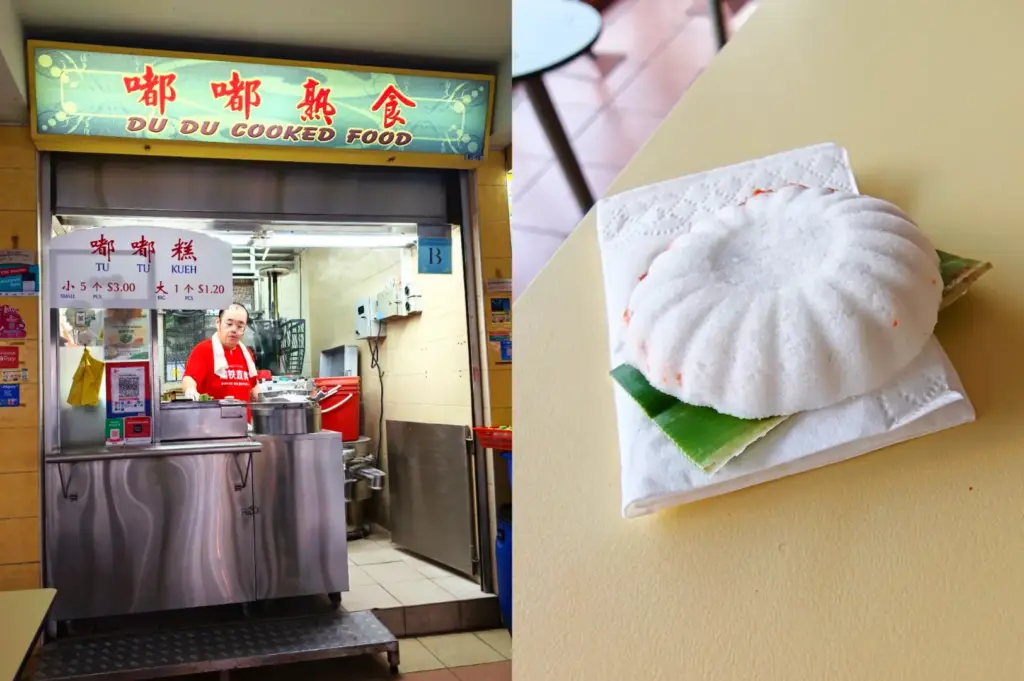
I usually end a Havelock food visit at Du Du, holding a small tray of warm tutu kueh. After fried noodles, braised pork, and soup, these delicate rice-flour cakes feel like a quieter finish. Du Du Cooked Food specialises in traditional tutu kueh filled with crushed peanuts or sweetened coconut.
The cakes are made by packing fine rice flour and filling into small moulds before steaming them until soft. What interests me most is the traditional preparation. The stall has been documented using older equipment to process its rice flour, a reminder that even a snack with only a few ingredients depends on technique.
What to Order and What to Expect
I prefer the coconut. The shredded coconut is moist and gently syrupy, giving the warm rice-flour shell just enough sweetness without overwhelming it. Five regular pieces have been priced at S$3, with a larger version previously available for around S$1.20 each.
The menu is deliberately limited. You won’t find the wide selection of modern flavours that some newer tutu kueh stalls offer. But that’s not necessarily a weakness.
When to Visit
Du Du works as a morning snack or a light dessert after a larger meal. The cakes are most enjoyable when eaten shortly after steaming, while the rice flour remains soft and fragrant.
My recommendation: Buy a mixed regular set and one large piece. Eat them warm and compare the coconut’s moisture with the peanut’s roasted aroma.
Why Havelock Food Is Worth Returning For
The neighbourhood has changed, ingredients have become more expensive, and some stalls have passed their cooking traditions to another generation. Yet the food still gives people reasons to return beyond familiarity.
If you’re planning to explore several stalls, Thursday or Friday morning is a practical starting point, though individual rest days, opening hours, and sellouts can change. Bring some cash, share dishes if you’re with friends, and don’t assume every stall stays open until the food centre’s general closing time.
That’s what makes Havelock food worth returning for. Not simply the memories attached to these stalls, but the fact that the cooking still gives those memories something to stand on.