The first time I got it wrong, it was a company dinner.
I’d booked a buffet because the photos looked good and a caption somewhere said “no pork, no lard.” I thought that settled it. Then a colleague, a quiet man I’d worked beside for years, leaned over and asked me softly whether the place was actually certified. I didn’t know. I hadn’t checked. And I watched him spend the whole evening eating only the plainest things on his plate, because I hadn’t done the one thing that would have let him relax.
That dinner stayed with me. Not because the food was bad, but because I’d made someone at my own table feel uncertain in a place that was meant to be shared.
So this is what I’ve learned since, about buffet halal Singapore dining, written the way I’d tell a friend over kopi.
What Buffet Halal Singapore Certification Actually Means
Here’s the thing I didn’t understand back then. “No pork, no lard” is not the same as halal. A buffet halal Singapore search should begin with process, not just dishes. Halal is about religious permissibility across the whole chain: the meat, suppliers, sauces, stocks, storage, utensils, and how the buffet line itself is handled. A spread can smell like grilled prawns, buttery rice, and warm roti prata, and still raise real questions once you look past the steam.
In Singapore, the authority that answers those questions is MUIS. A halal certified restaurant is not just making a casual claim. Certification runs through application, inspection, post-certification checks, and renewal, which matters when diners are sharing trays, ladles, different ingredients, and sauces from the same table.
Why Certification Changes the Dining Experience
When I say certification changes the dining experience, I mean it removes the guessing. Nobody has to interrogate the menu or hover nervously over a carving station. The process has already been checked by someone whose job is to check.
That is why a halal buffet can feel so different from a normal shared spread. It creates an inclusive dining experience where Muslim and non-Muslim guests can eat from the same trays without one person carrying the burden of asking about stock, gelatin, alcohol, or hidden marinades.
The Mistake Almost Everyone Makes
I used to think Muslim ownership meant certified. It doesn’t, necessarily.
Certification in Singapore is voluntary. A Muslim-owned restaurant may choose not to apply, and that is their right. But it means you cannot assume halal status from the owner’s name, the cuisine, the decor, or the absence of pork on the menu. “Muslim-friendly” and “fully halal certified” are two different assurances, and only you know which one your table needs.
Fanatic tip: If your guests require certification, treat phrases like “halal-friendly,” “Muslim-friendly,” and “no pork no lard” as helpful but not final. They are not the same as a MUIS listing.
How to Verify a Halal Buffet in Singapore
This part takes about five minutes, and it saves the kind of evening I described earlier.
Step 1 — Search the MUIS Directory
Look up the outlet by name on the official MUIS halal establishment listing. Do not rely on old food news, a delivery app label, or a social caption from two years ago.
Step 2 — Check the Specific Buffet Restaurant
This is the one people miss. Certification is by premises, not just by brand. A chain might have one certified outlet and one that is not. Hotels, pop-ups, and seasonal lunch and dinner buffets especially need checking by location.
Step 3 — Match It to the Buffet Type
A fresh seafood buffet raises questions about sauces, wine reductions, and chilled handling. A Korean BBQ buffet raises questions about marinades and grill separation. A dessert table raises questions about gelatin, flavourings, and whether that creamy durian pengat is prepared in a certified kitchen.
Step 4 — Ask About Special Periods
Festive menus, Ramadan iftar, Mother’s Day, Father’s Day, National Day, Christmas Eve, and public holidays can shift the dishes, the buffet price, the seating time, and sometimes the kitchen setup. Always check the latest rate before making a reservation.
Fanatic tip: For buffets inside a non-halal hotel, don’t assume the hotel name covers the restaurant. Verify the specific kitchen or outlet. The brand on the building means nothing without the certificate.
Buffet Price, Service Charge, and What You'll Actually Pay
Prices move quickly with promotions and public holidays, so read every buffet price as “from” rather than fixed.
Budget to casual: around S$20–S$40++ per adult. Think casual hotpot, neighbourhood spreads, or a promotional lunch buffet.
Mid-range hotel buffet or buffet restaurant: around S$45–S$70++ per adult, often daily lunch or a lighter dinner.
Premium hotel buffet: around S$70–S$110++ per adult, especially dinner buffets, weekend seafood, snow crab, lobster, or festive spreads.
Remember the “++.” Service charge and GST turn a S$70 headline into something noticeably higher. Then come drinks, child pricing, and premium add-ons. I’ve watched a relaxed family dinner quietly become a much larger bill because nobody agreed on a number first.
If you are planning around weekday budgets and office lunch timing, this Asia Food Fanatic guide looks at how Singapore diners make quick meals work during the lunch rush.
Fanatic knowledge: Agree on the budget before you book, not at the table. A halal buffet is often the best halal solution for big groups, and big groups spend fast.
Timing, Dress Code, and Planning for Dinner Buffets
If you want a calmer meal, weekday lunch is usually easier. Weekend dinner buffets are when the seafood trays fill, the live stations get smoky, and the queue for satay or chilli crab can snake longer than expected.
Booking Tips
For mixed groups, book earlier than you think you need to.
Halal-certified hotel buffets are common choices for birthdays, company dinners, iftar, and multi-generational meals.
Ask about child pricing, whether each paying adult qualifies for promotions, and whether complimentary parking is included. Do not assume it is.
Check the dress code. Many hotel restaurants are smart casual, which usually means no flip flops, beachwear, or sloppy errand clothes.
If your group has dietary requirements, ask ahead. Halal certification answers one question, but allergens, vegetarian options, and spice tolerance are separate.
What a Good Buffet Shows You
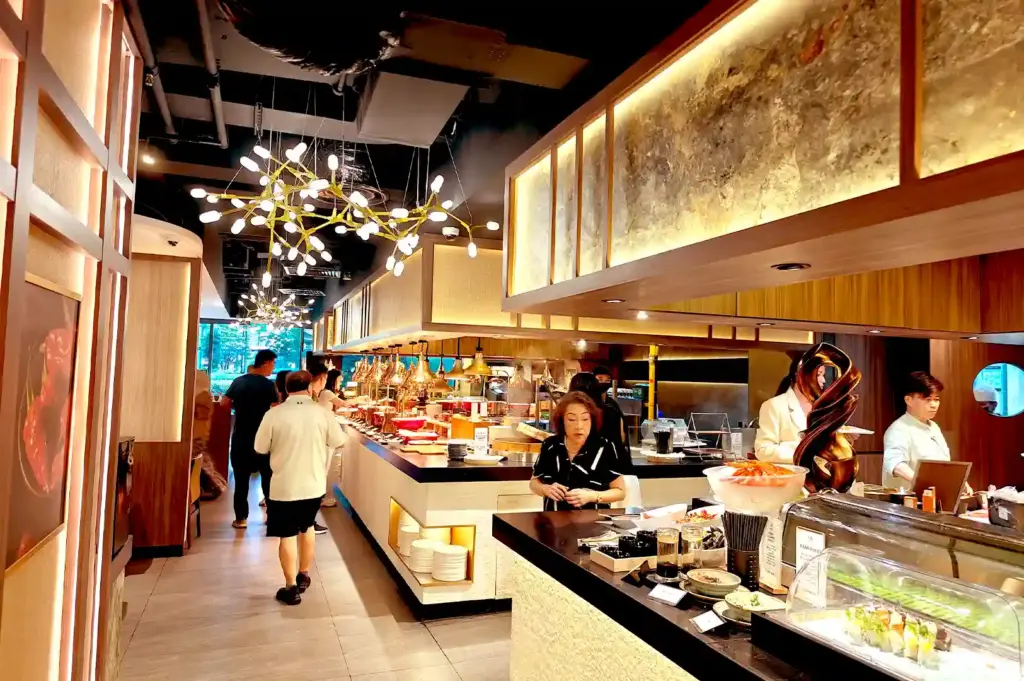
Over the years I’ve learned to read a buffet line the way you’d read a room.
For another look at how shared Chinese dining depends on pacing, variety, and the way dishes move around the table, read our best Chinese restaurant Singapore piece.
Signs of a Good Buffet
A valid certificate or clear MUIS listing.
Staff who can answer a halal question calmly.
Utensils that stay with their own dishes.
Hot food that is covered and properly hot.
Cold fresh seafood that stays cold.
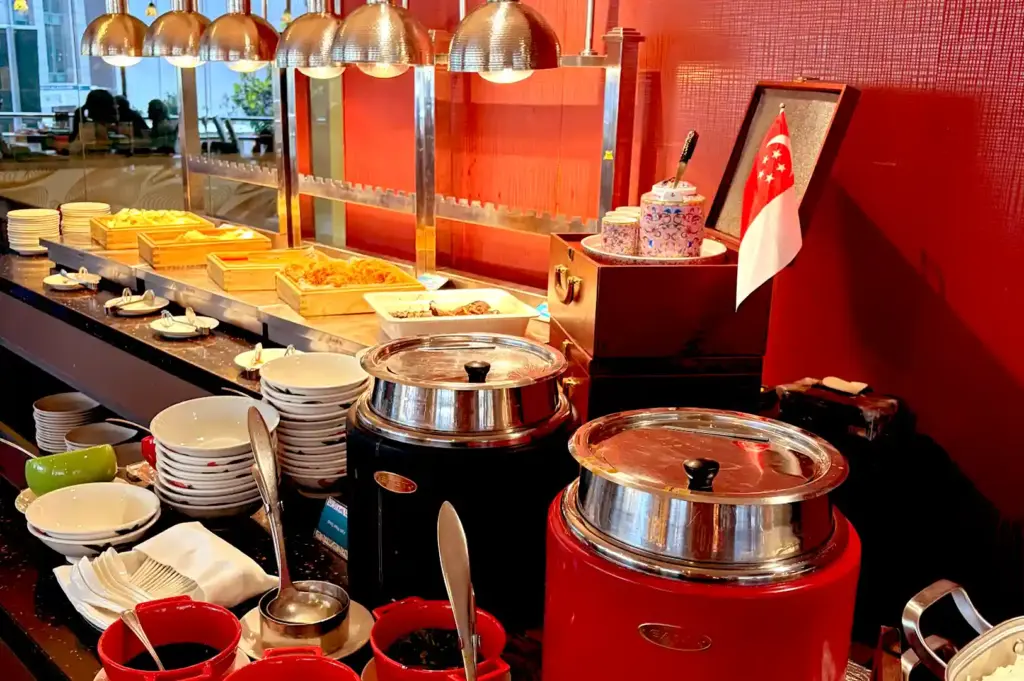
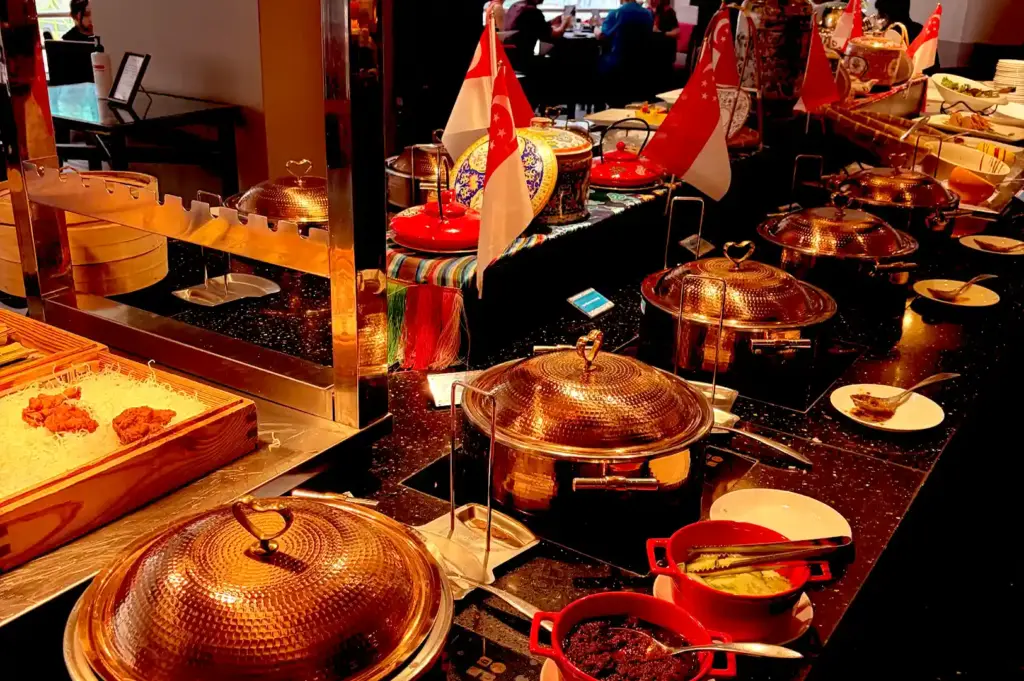
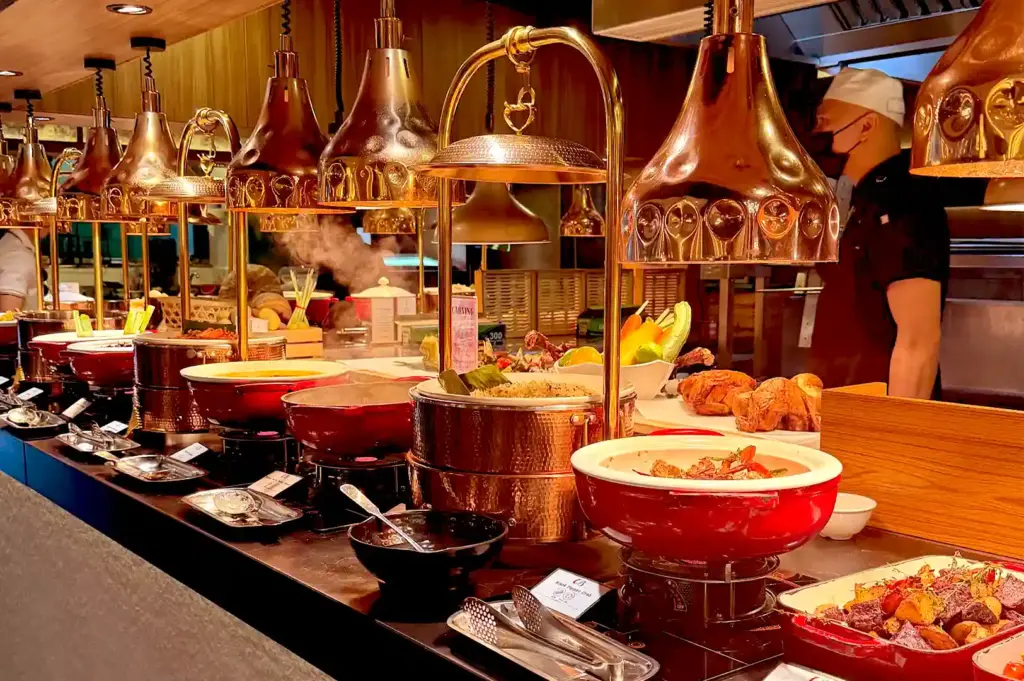
Trays refreshed in small batches, not abandoned under tired lamps.
Labels for gelatin, spice, nuts, and sauces.
Freshly prepared dishes at live stations, where steam smells clean rather than stale.
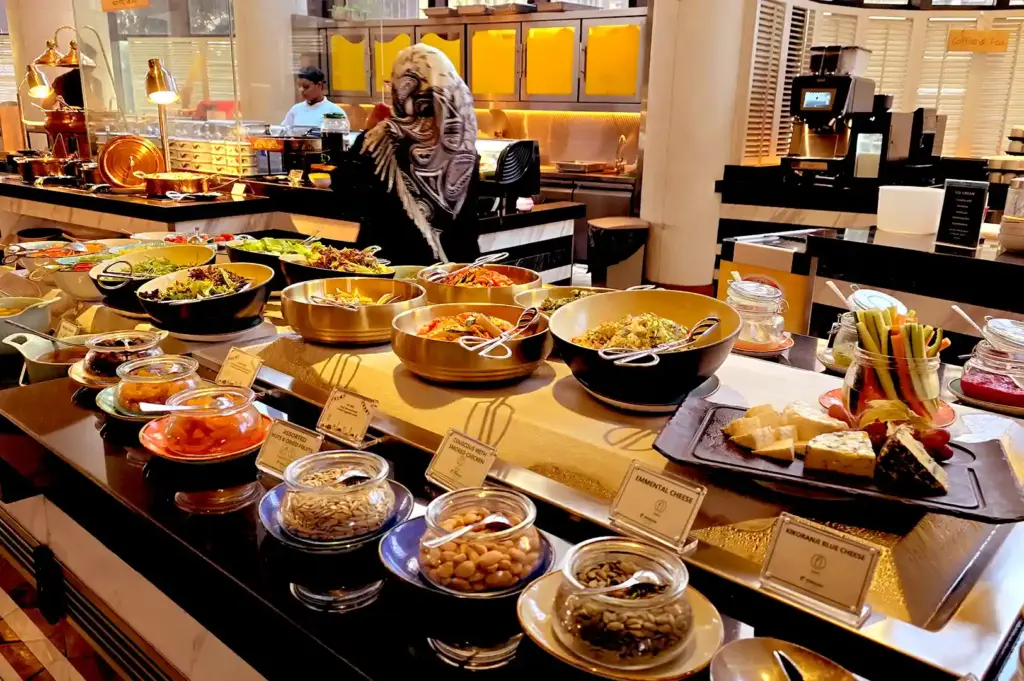
The best halal buffet is not simply the one with the longest table. It is the one where good food still feels cared for after the fifth round: crisp satay edges, glossy Singapore chilli crab sauce, soft butter chicken, warm rice, and chilled prawns that still taste of the sea.
Red Flags
Staff who cannot explain certification.
A restaurant absent from the MUIS directory.
Halal claims that live only in an old post.
Sauce-crusted counters and trays left too long.
Serving spoons drifting between dishes.
Fanatic tip: Start with a small first round. It tells you which sections are strongest before you commit your appetite, and it shows how quickly the kitchen replenishes.
Local Examples
A real Singapore guide needs examples, not just rules.
Holiday Inn Singapore Atrium
At Holiday Inn Singapore Atrium, Atrium Restaurant is useful because it shows how a halal-certified hotel buffet can lean into international favourites and local classics like laksa and chilli crab, while also answering practical concerns such as a nearby prayer room and no automatic complimentary parking.
PARKROYAL COLLECTION Marina Bay
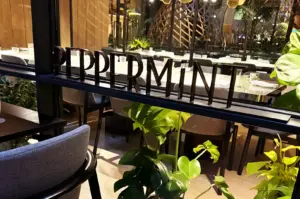
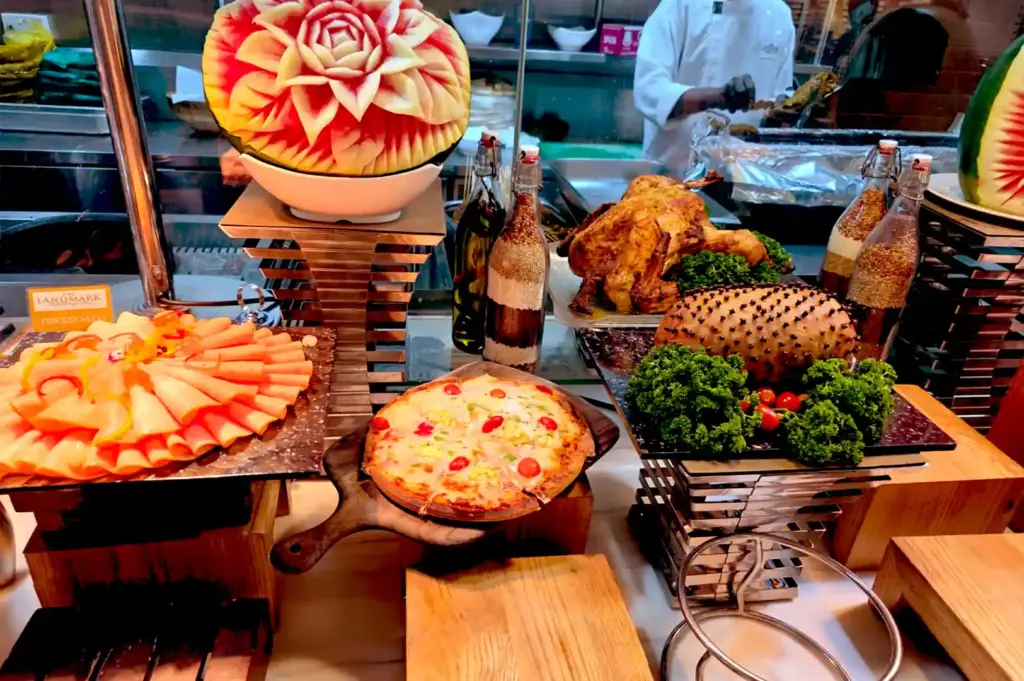
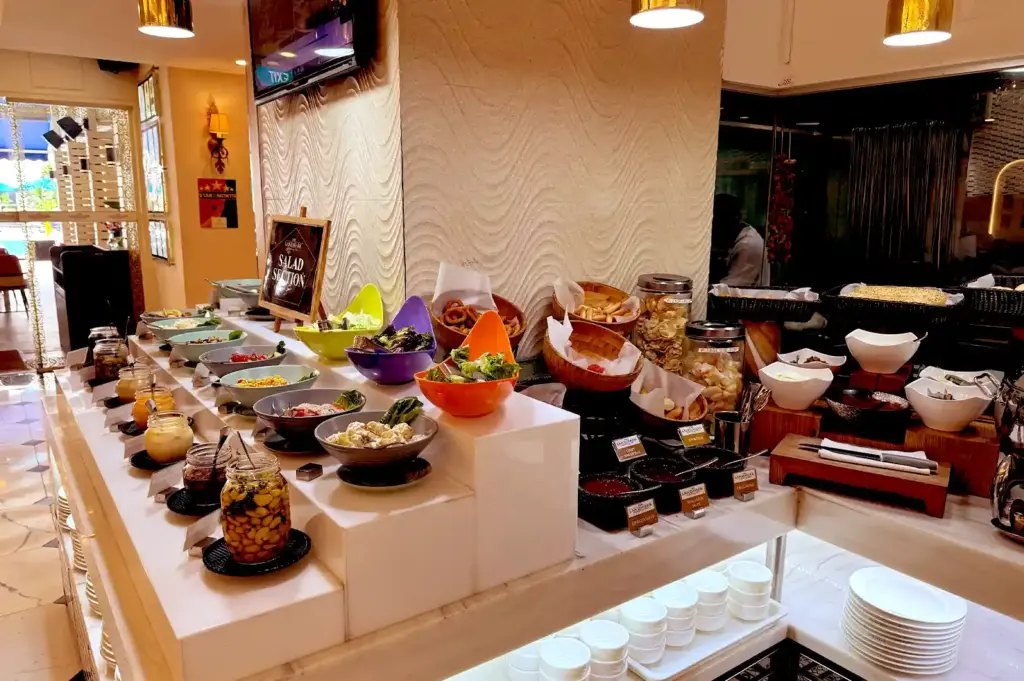
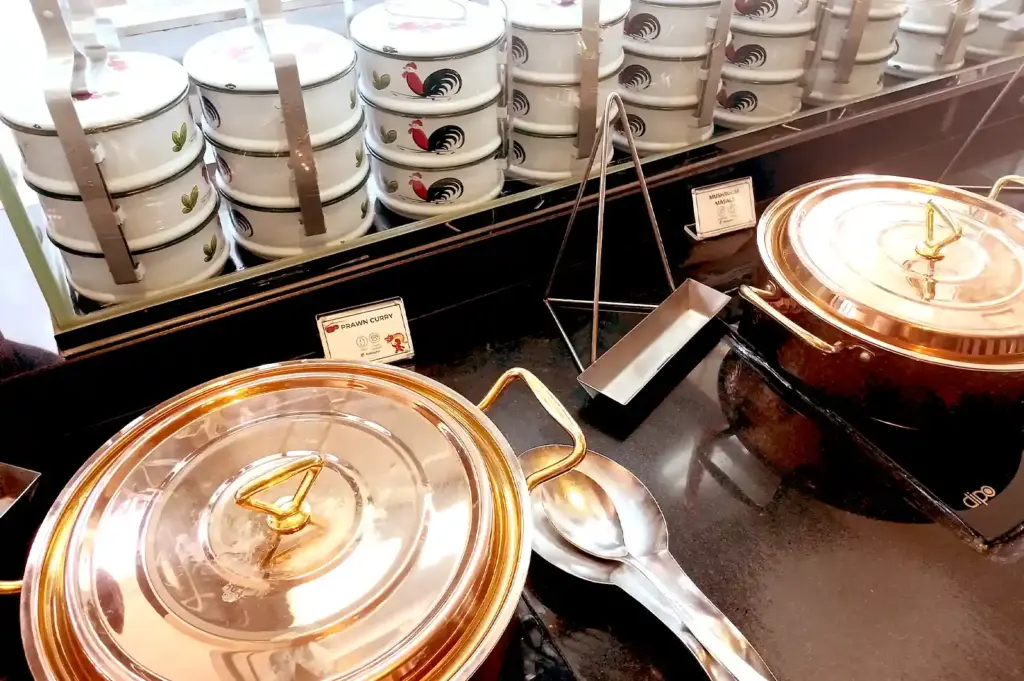
At PARKROYAL COLLECTION Marina Bay, Peppermint is another strong case study. Its halal-certified buffet stations make group dining feel easier, and its dessert counter has a rich durian pengat that lands like creamy fruit custard with a faint bitter edge. Its Smoke & Char Collection also shows how fire-led cooking, time honoured techniques, and live stations can still sit within a certified framework.
Arab Street and East Coast
Around Arab Street, the historic Gedung Kuning, or Yellow Mansion, adds a different layer. A meal near Bugis MRT can feel tied to heritage as much as appetite, with regional delicacies, nyonya kueh, teh tarik, and old neighbourhood textures around the table. On the East Coast, the mood changes again: more casual, breezier, often more family-led, but the same rule applies. Verify before you dine.
Before You Book
I still think about that quiet colleague, eating carefully because I’d assumed instead of checked.
The lesson wasn’t complicated. A halal-certified buffet feels different not because of what’s on the trays, but because of what’s been lifted off the table — the doubt, the asking, the burden that usually falls on one person to make sure everyone else is safe to eat.
So do the five-minute check. Search the MUIS listing. Confirm the specific outlet. Agree on the budget. Then let the meal be what a shared spread is supposed to be.
A table where everyone reaches for the same food, without hesitation. That’s worth far more than any photo of the spread.