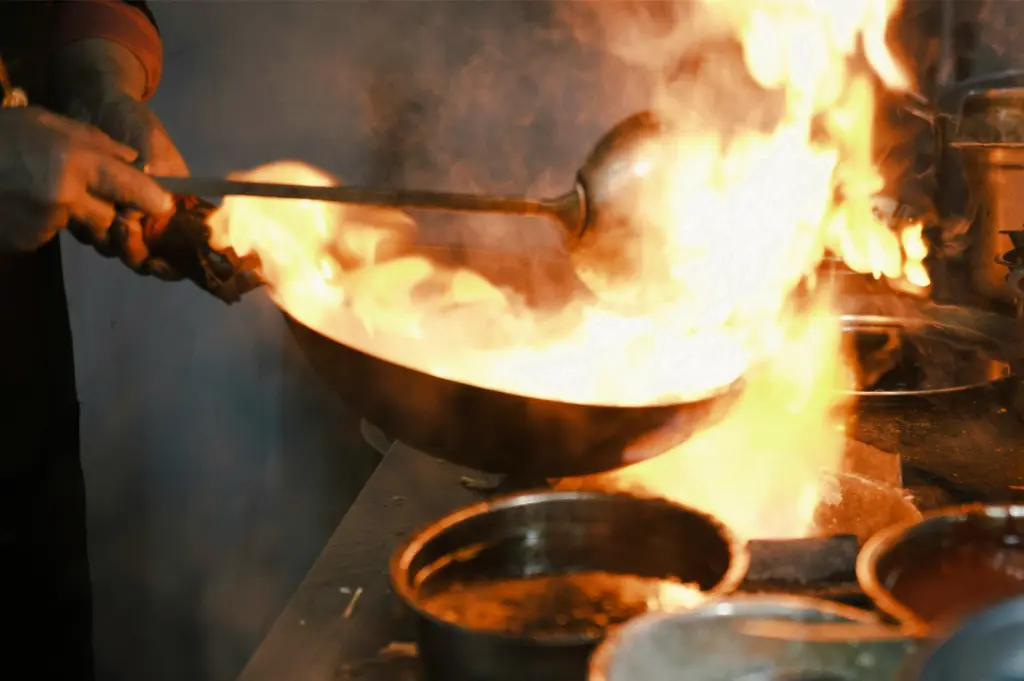
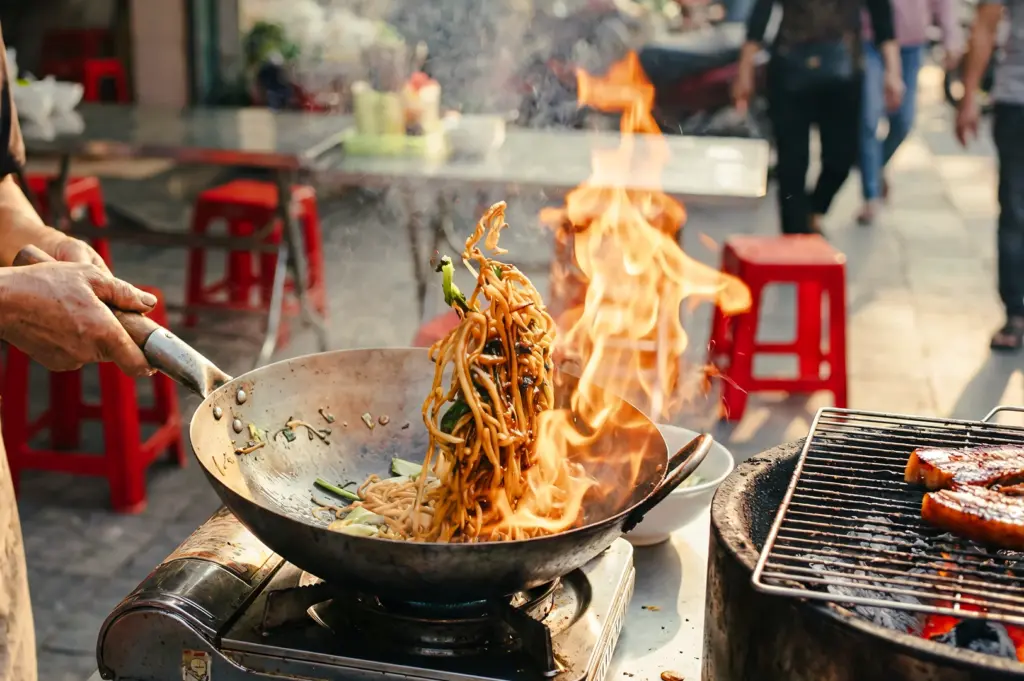
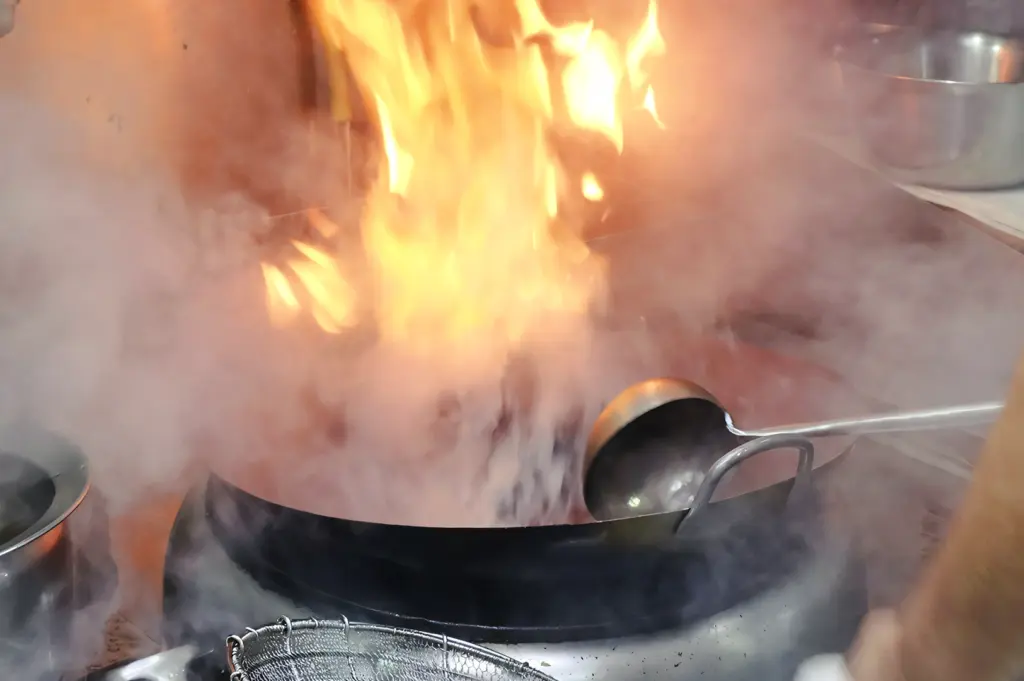
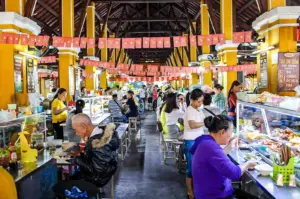
The evening air in Ho Chi Minh City is thick with humidity and the unmistakable smell of intense heat. Down a narrow alley, a cook stands over a roaring jet burner at a small stall. A heavy carbon steel wok sits on the flame. Oil hits the hot metal, followed immediately by a handful of noodles, fresh vegetables, and meat. The sizzle is deafening. Smoke billows up, catching the glow of the streetlights. With a quick flick of the wrist, the chef tosses the ingredients through the air. The resulting aroma makes your mouth water instantly. This is the essence of high-heat cooking in Vietnamese street food.
Understanding how this heat transforms ingredients is key to understanding the food itself. It is a process that turns simple raw materials into an unforgettable meal.
Demystifying the Breath of the Wok
Wok hei translates literally to the breath of the wok. It is a specific set of complex aromas and flavors created by high heat, hot oil, and fast movement. Many people mistakenly believe wok hei simply means burnt food. That is incorrect. Wok hei is a delicate balance. It is the distinct smoky, charred flavor that coats a well-executed stir-fried noodle dish without tasting like ash.
To achieve this, a cook must master the physical environment of the wok. The metal must be hot enough to instantly evaporate moisture. The oil must coat the ingredients evenly. The toss must
introduce oxygen to aerosolize the oil, creating microscopic droplets that catch the flame for a fraction of a second. This fleeting contact with fire imparts the signature flavor that defines the best food in the region.
The Practical Science of High Heat
The magic of wok hei relies heavily on chemistry. When proteins and starches hit a surface heated to over 400 degrees Fahrenheit, the Maillard reaction occurs. This chemical reaction between amino acids and reducing sugars creates hundreds of new flavor compounds. It is the same process that gives grilled pork its deep brown crust and savory taste.
Caramelization happens simultaneously, breaking down natural sugars in vegetables to add a complex sweetness. Furthermore, as the cook tosses the ingredients, the aerosolized oil carries aroma directly into the food. The curved shape of the wok allows ingredients to pass through different temperature zones rapidly. They sear at the bottom and cool slightly in the air.
This rapid fluctuation prevents the food from turning mushy, preserving the crisp texture of fresh vegetables while fully cooking the meat.
High Heat Across Vietnamese Street Food
While wok hei is often associated with Chinese cuisine, high-heat techniques are deeply embedded in the culinary fabric of Vietnam. You will see these methods adapted across different food stalls and formats, from Hanoi in the north to Hoi An in the center and down to Ho Chi Minh City.
Rice Noodle Soup and Spring Rolls
A classic stir-fried noodle dish like pho xao relies entirely on wok hei. The flat rice noodles must sear against the metal, picking up a smoky edge before they are served. Yet, high heat extends beyond the wok. The grills that line the streets rely on intense charcoal fires. The grilled pork used in bun cha is kissed by direct flame, creating a caramelized crust that contrasts beautifully with a cold dipping sauce, fresh herbs, and soft rice noodles.
Banh Mi and Fried Tofu
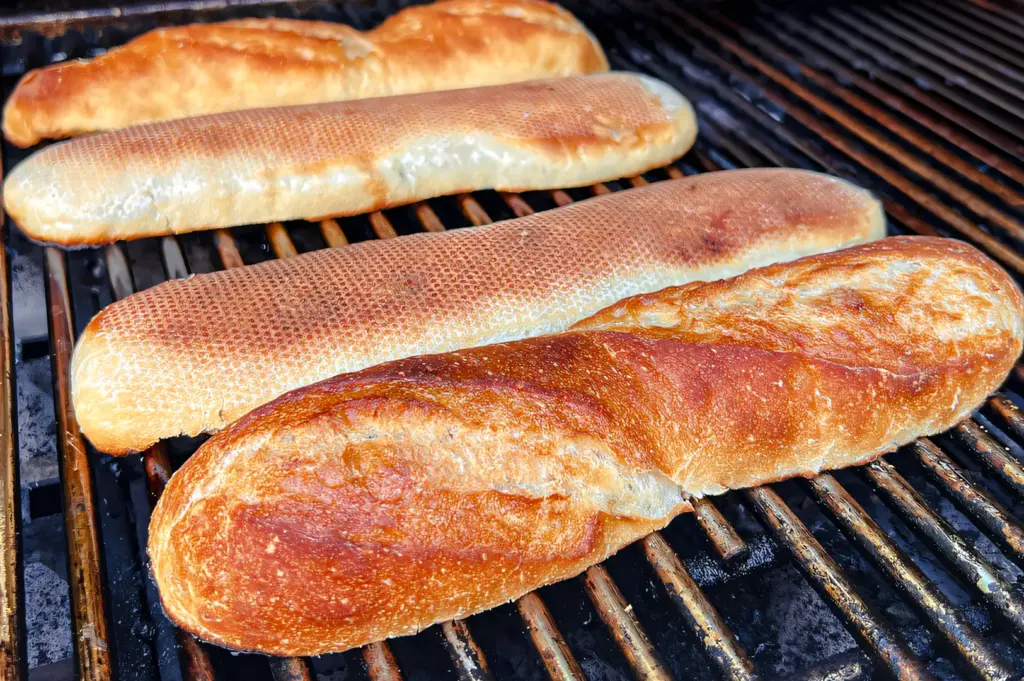
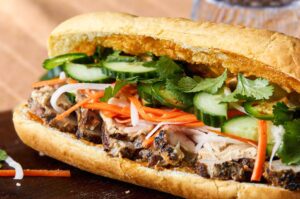
You will also find high heat shaping simpler items. For example, for a bánh mì sandwich, a bánh mì vendor will toast the bread on a hot griddle until it shatters perfectly, ready to be filled with pork, cucumber, and fresh herbs. Even fried tofu requires a violently hot oil bath to achieve a crisp exterior while remaining silken inside.
However, not all the food relies on this intense heat. A deep, clear
beef broth for pho requires hours of gentle simmering. The contrast makes a meal complete. You might follow a smoky stir fry with fresh spring rolls wrapped in rice paper, dipping them in a peanut sauce or fish sauce. You might finish with a dessert of sweet soup flavored with coconut milk and glutinous rice, or sit at a low table with a glass of strong condensed milk coffee.
A Handy Guide to Spotting It
Recognizing good wok hei is a sensory skill. When you eat at a local restaurant or street stall, you can use this handy guide to evaluate your dish.
- The Smell: Look for a distinct, toasty, and slightly smoky aroma. It should smell savory, never bitter or acrid.
- The Taste: The flavor should be complex and lingering. A good bowl of stir-fried noodles will have a background note of fire that enhances the seasoning, chilli, and lemongrass.
- The Texture: Ingredients should retain their integrity. A prawn should snap. The veg should be crisp. The noodles should be distinct, not clumpy or soggy.
- The Speed: True high-heat cooking takes only minutes. If your food sits in a pan for a long time, it is simmering, not frying.
- The Surface: Look for tiny, distinct blisters on meats or an egg. This indicates the oil was hot enough to flash-fry the exterior.
A flat version of a dish misses these marks completely. Without proper heat, the ingredients steam in their own juices. The flavor becomes muddy, and the texture turns soft.
Limitations and Cultural Context
Of course, cooking at these temperatures comes with trade-offs. The process generates massive amounts of smoke and aerosolized oil, creating major ventilation challenges. It is an uneven process that requires constant attention. If a cook turns away for a few seconds, a tasty dish becomes ruined.
It is also important to acknowledge the broader
Southeast Asia context. Across the region, high-heat techniques vary. In Vietnam, cooks often use intense heat for quick, bright stir fries, contrasting them with an abundance of raw greenery, cold condiments, and fragrant soups. The Vietnamese approach to the wok is lighter, often using less heavy sauces than neighboring countries, allowing the natural flavor of chicken, beef, or vegetables to shine.
The Return-Worthy Meal
The appeal of Vietnamese street food lies in its striking contrasts. The fierce heat of the wok or grill sits right next to baskets of cool, fragrant herbs. It is this balance that makes the cuisine so compelling. The science of combustion, the Maillard reaction, and aerosolized oil might explain the mechanics of the flavor.
Yet, it is the skill of the vendor on the street that turns those mechanics into something you want to eat again and again. When a dish is executed with proper wok hei,
it captures a fleeting moment of heat and smoke on a plate. It is a flavor you will certainly miss the moment you leave the country.
For more on Asian Cuisine, check this article on
The Philosophy Behind Omakase Singapore!