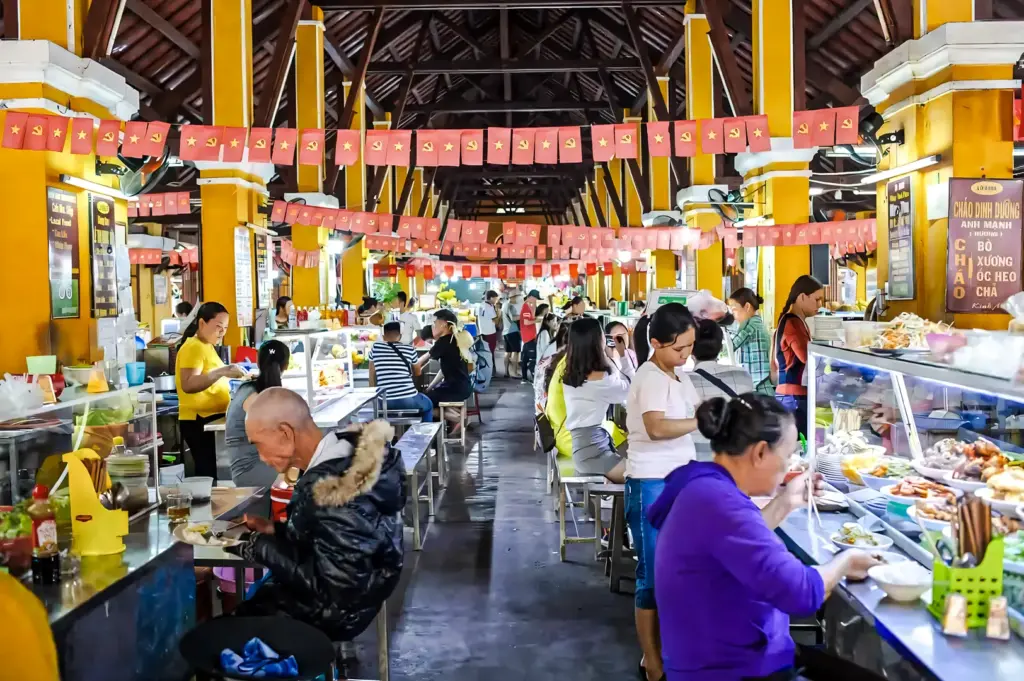
The morning air in Hoi An always carries a certain stillness before the heat of the day settles in. It is during this quiet hour that I find myself sitting on a low plastic stool, watching steam rise from a bowl of clear broth. The vendor hands me a plate piled high with vibrant green foliage and a small wedge of lime. Before I take my first bite, I tear the leaves, squeeze the citrus, and stir. In that simple ritual, a profound culinary philosophy comes to life. It is the careful, deliberate harmony of sweet, sour, salty, and fresh flavors.
This equilibrium is the very soul of
Vietnamese cuisine. It is not about overwhelming the palate with a single, aggressive note. Instead, it asks for your participation to
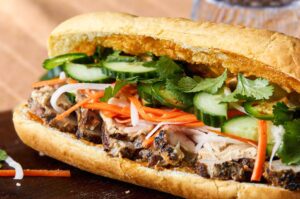
find the perfect center. When you explore typical Vietnamese dishes like a
Banh Mi sandwich perhaps, you realize that every bowl and plate is an invitation to balance.
The Alchemy of the Bowl: Pho and Bún Bò Huế
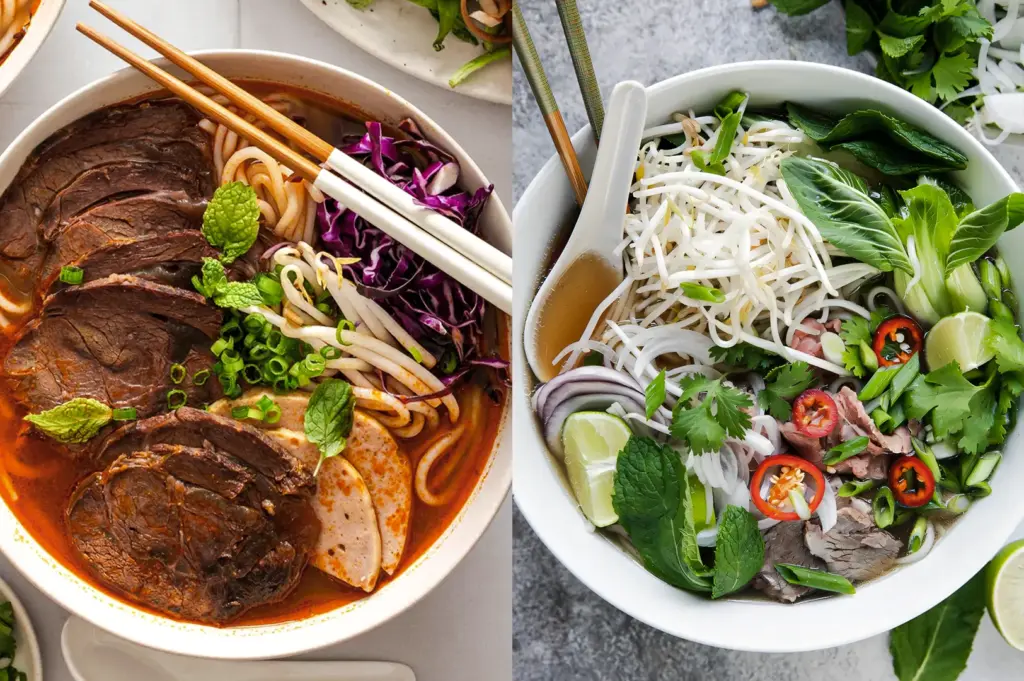
Nowhere is this philosophy more evident than in the country’s beloved noodle soups. A steaming bowl of pho or a spicy beef noodle soup like bún bò huế is never served as a finished product. The broth, simmered for hours with pork bones or beef, provides a deeply savory and slightly sweet foundation. But it is the accompaniments that bring the dish to life.
You are given a garden on a plate. You add fresh herbs like Thai basil and mint to introduce bright, aromatic high notes. You toss in crisp bean sprouts for a sudden, refreshing crunch. A splash of fish sauce deepens the salty, umami profile, while a squeeze of lime or a spoonful of vinegar cuts through the richness with a sharp, sour tang. The flat rice noodles or thick, chewy noodles act as a gentle, neutral canvas that absorbs this complex alchemy. Every spoonful becomes a calibrated experience.
A Study in Textures and Contrasts
The pursuit of balance in authentic Vietnamese food extends far beyond flavor. It is also deeply rooted in texture. You can see this vividly when comparing Vietnamese fresh spring rolls to fried spring rolls.
Fresh Spring Rolls and Fried Spring Rolls
When you bite into a fresh roll, the translucent rice paper yields to the soft snap of fresh vegetables, cold rice noodles, and tender shrimp or boiled chicken. It is dipped into a rich, savory peanut sauce or a sharp hoisin dipping sauce to ground its lightness.
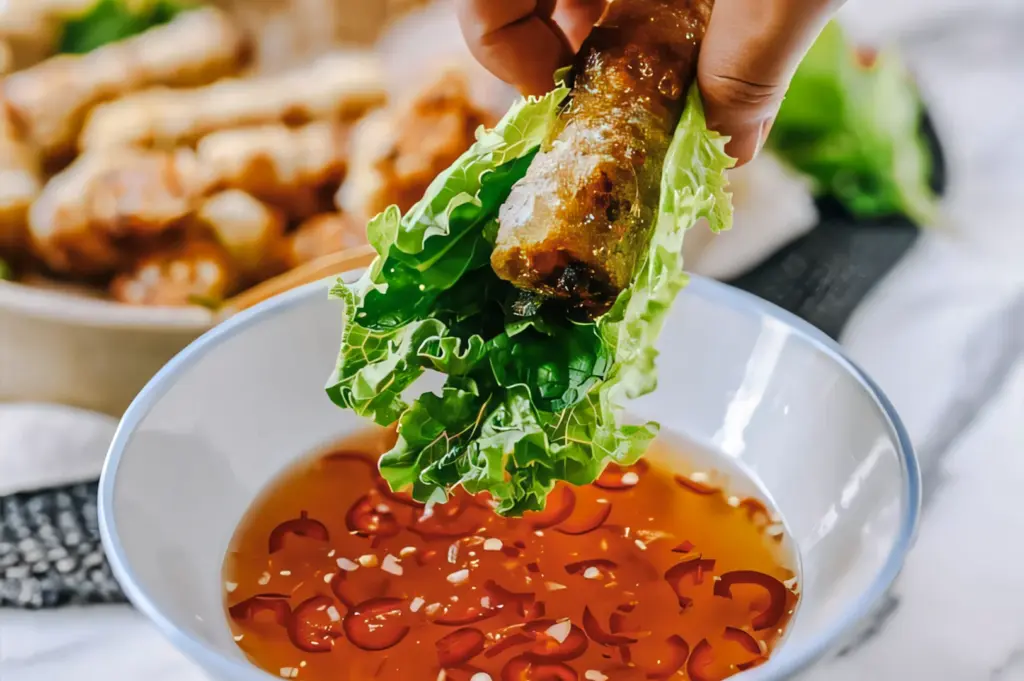
Conversely, the fried version offers a shatteringly crisp exterior made from rice batter or thin wrappers, giving way to a warm, savory filling of minced pork and
wood ear mushrooms. These fried bites are often wrapped in crisp lettuce leaves and dipped in a light, sweet and sour fish sauce. The contrast of hot and cold, crisp and soft, rich and sharp is entirely intentional.
Grilled Pork and Broken Rice
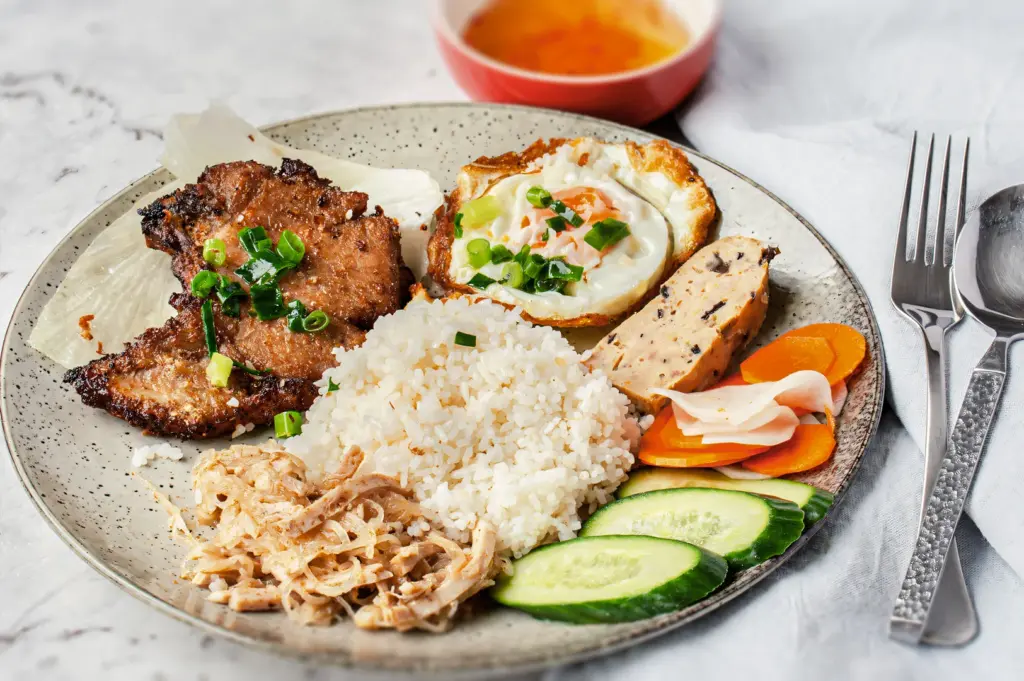
This textural harmony is equally striking in rice-based dishes. Consider broken rice, a quintessential Vietnamese dish born from necessity. The fractured rice grains have a unique, comforting texture that beautifully absorbs the savory juices of grilled pork.
The plate is often completed with a fried egg, the crunch of pickled carrots and daikon, and a generous scatter of fragrant fried shallots. The pickled vegetables slice through the richness of the grilled meats, proving once again that in this cuisine, nothing heavy exists without something light to lift it.
A Geography of Taste: Central Vietnam and Beyond
As you travel, you notice how the balance shifts to reflect the landscape and history of the people. The interpretation of sweet, sour, salty, and fresh changes depending on where you sit.
Northern Vietnam
In northern Vietnam, the flavors lean toward subtlety and clarity. The food here relies less on sugar and more on the clean, savory depth of soy sauce and black pepper. A dish like bun cha features grilled pork patties resting in a warm, gently seasoned broth, paired with thin rice vermicelli noodles and fresh greens. Northern cuisine often includes traditional Vietnamese dishes such as bun bo hue, a spicy beef noodle dish that showcases the region’s love for balanced, yet robust flavors.
Central Vietnam
Move down to central Vietnam, and the palate becomes bolder, more complex, and significantly spicier. The use of fermented shrimp paste adds a pungent, salty depth that demands the sharp contrast of fresh herbs to mellow its intensity. This region is also known for its intricate noodle dishes, often accompanied by toasted sesame rice crackers and garnished with fried onions to add texture and flavor.
Southern Vietnam
By the time you reach southern Vietnam, the climate is hotter, and the produce is intensely abundant. The street food scene in Ho Chi Minh City reflects this vibrance. Here, you will find a sweeter flavor profile, often enriched by coconut milk and glutinous rice preparations like sticky rice desserts.
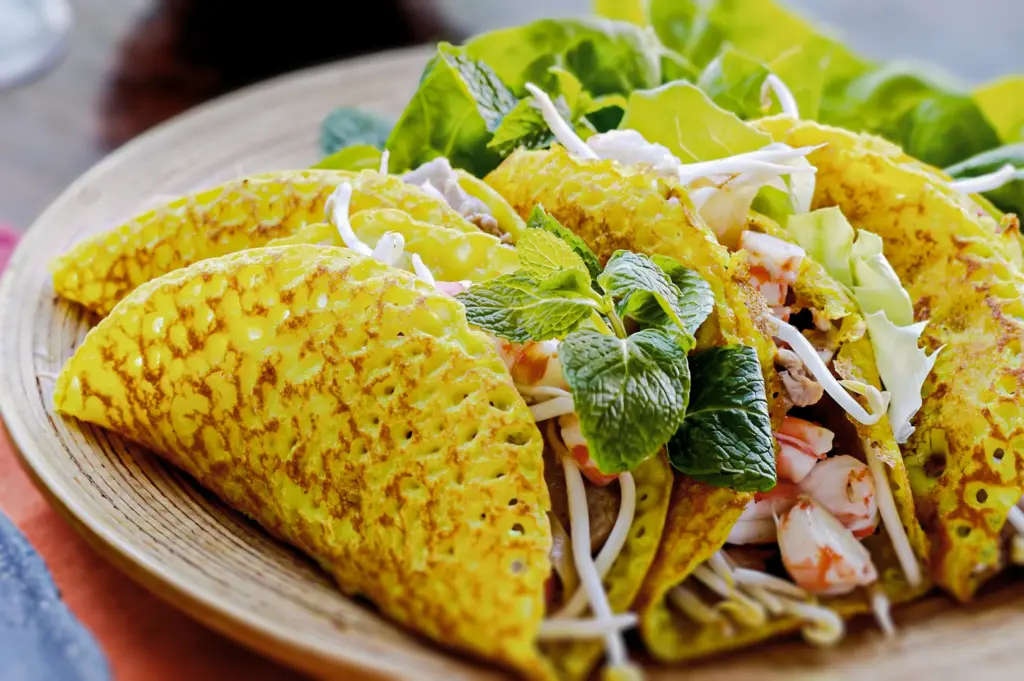
A sizzling
banh xeo, a golden crepe made of rice flour and turmeric, is stuffed with pork belly and shrimp. You tear off a piece, wrap it in mustard greens, and dip it into a sweet and sour sauce. The sweetness of the south is always kept in check by a generous handful of bitter, fresh leaves.
Southern Vietnamese cuisine also offers a unique
Vietnamese version of chicken rice, reminiscent of Hainanese chicken rice, featuring shredded chicken served alongside fragrant boiled rice and accompanied by crispy fried pork rinds. And no meal is complete without a cup of strong Vietnamese coffee to round out the experience.
The Restorative Nature of Balance
There is something deeply comforting about eating this way. Traditional Vietnamese food does not weigh you down. It revitalizes you. The heavy reliance on fresh herbs, the judicious use of fish sauce, and the clean energy of rice noodles all work together to create meals that feel inherently nourishing.
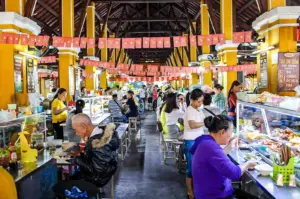
When I finish a meal at a street stall, listening to the hum of motorcycles and the clatter of chopsticks, I am always struck by how grounded I feel.
The delicate balancing act of sweet, sour, salty, and fresh is more than just a culinary technique. It is a reflection of a culture that understands the necessity of harmony. It is a deeply human way to eat, reminding us that
true satisfaction is found not in excess, but in finding the perfect, quiet center.