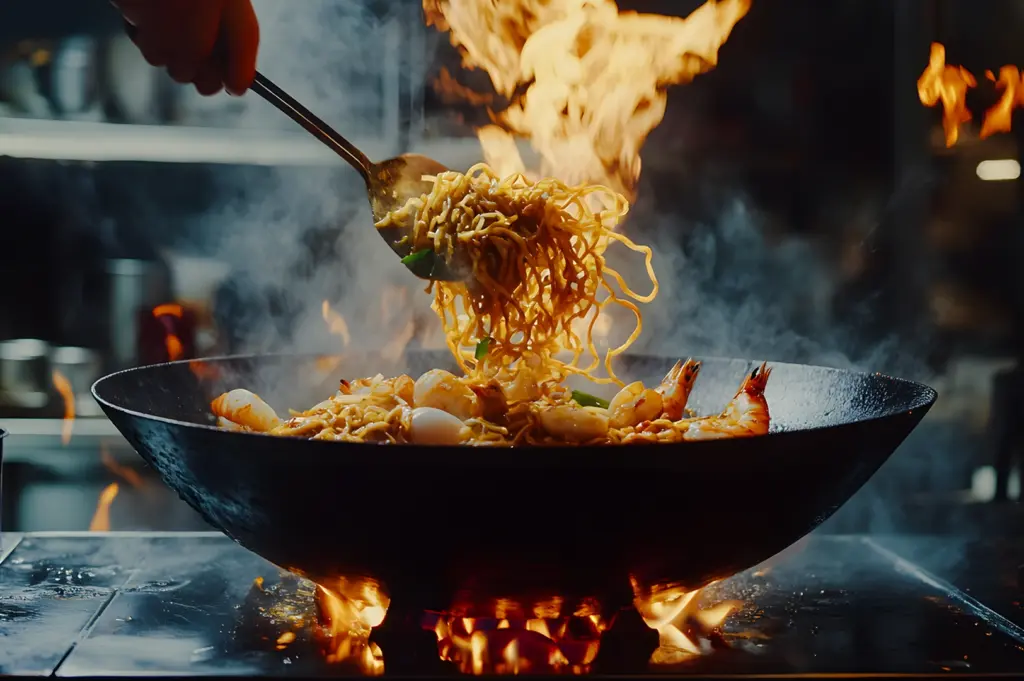
The sharp crackle of pork fat hitting a intensely hot wok signals the start of something special. A thick cloud of savory smoke rises into the air, carrying the rich scent of minced garlic, dark soy sauce, and fiery chili paste. Within a few seconds, a skilled cook transforms a simple mound of flat rice noodles into one of the most iconic dishes in Southeast Asia.
Char kway teow is a masterpiece of
street food engineering. Yet, depending on where you stand in the region, the perfect plate looks and tastes entirely different.
The rivalry between Penang char kway teow and Singapore char kway teow is legendary. Both versions share a common ancestry, but they have evolved to reflect the distinct cultural identities and palates of their respective homes. I have learned that understanding these differences turns a simple meal into a fascinating study of culinary history.
The Penang Style: Savory, Smoky, and Seafood-Forward
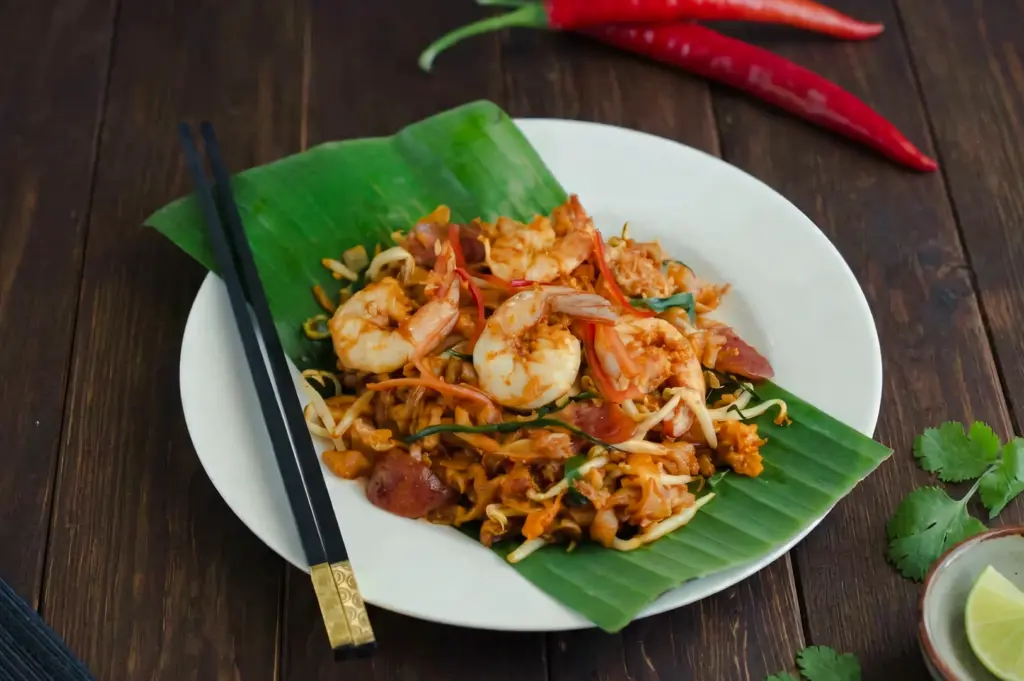
To experience traditional char kway teow in Penang is to understand the absolute necessity of high heat. The Penang version is famously savory, light in color, and deeply infused with wok hei, the breath of the wok.
A
traditional Penang char kway teow stall relies on a
fierce flame and a
well-seasoned hot pan to quickly sear the ingredients. The process begins with
fresh pork lard, which melts down to coat the flat rice noodles. This creates a rich, slippery texture without making the dish wet. The cook then tosses in fresh noodles, tossing them rapidly to ensure they char slightly at the edges rather than steam.
Seafood and Briny Blood Cockles
The ingredients in the Penang version lean heavily toward fresh seafood and sharp aromatics. You will typically find plump prawns and briny blood cockles, which are added at the very end so they remain just tender. Garlic chives and crisp bean sprouts provide a fresh, sharp crunch to cut through the richness of the pork fat.
One of the defining secrets of a truly great Penang plate is the use of
a duck egg. The larger yolk and richer fat content of the duck egg coat the koay teow, binding the light soy sauce and chili paste into a creamy, savory glaze. The result is a dish that is
slightly dry, highly aromatic, and intensely savory.
The Singapore Style: Sweet, Dark, and Complex
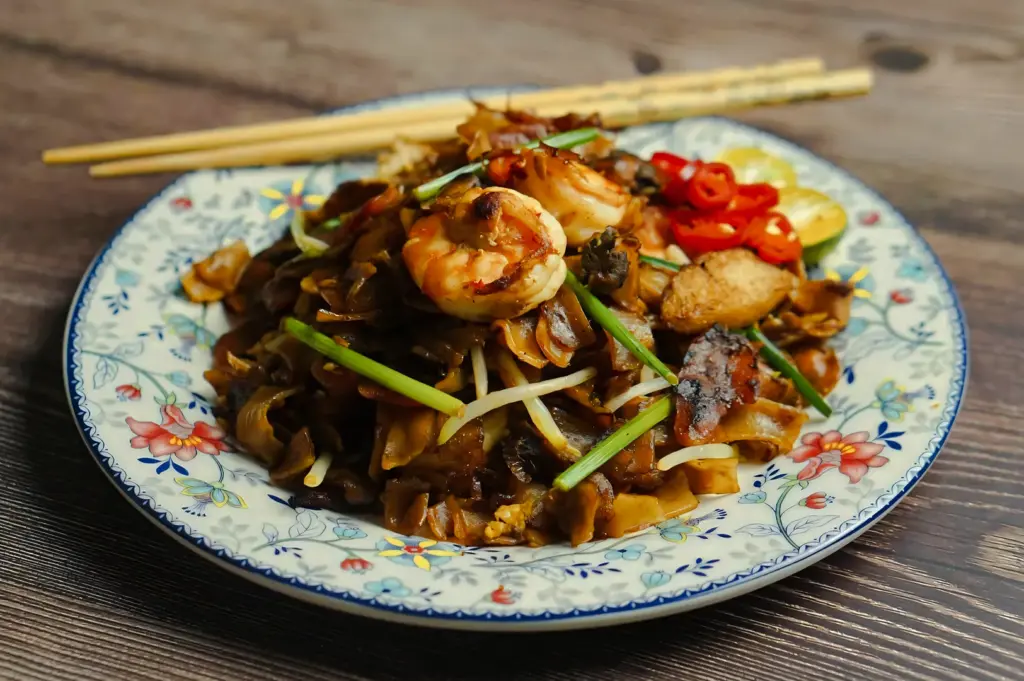
Travel south, and the dish undergoes a significant transformation. Singapore char kway teow is noticeably darker, sweeter, and slightly wetter than its northern counterpart. While the Penang version is a quick, dry sear, the Singapore stir fry method incorporates a richer, more complex sauce profile.
The defining characteristic of the Singapore style is the generous
use of sweet black sauce, which caramelizes in the hot wok and gives the fried kway teow its signature glossy, dark brown appearance. This sweetness is carefully balanced with savory elements like fish sauce and a savory chili paste.
Chinese Saugsage and Flat Rice Noodles
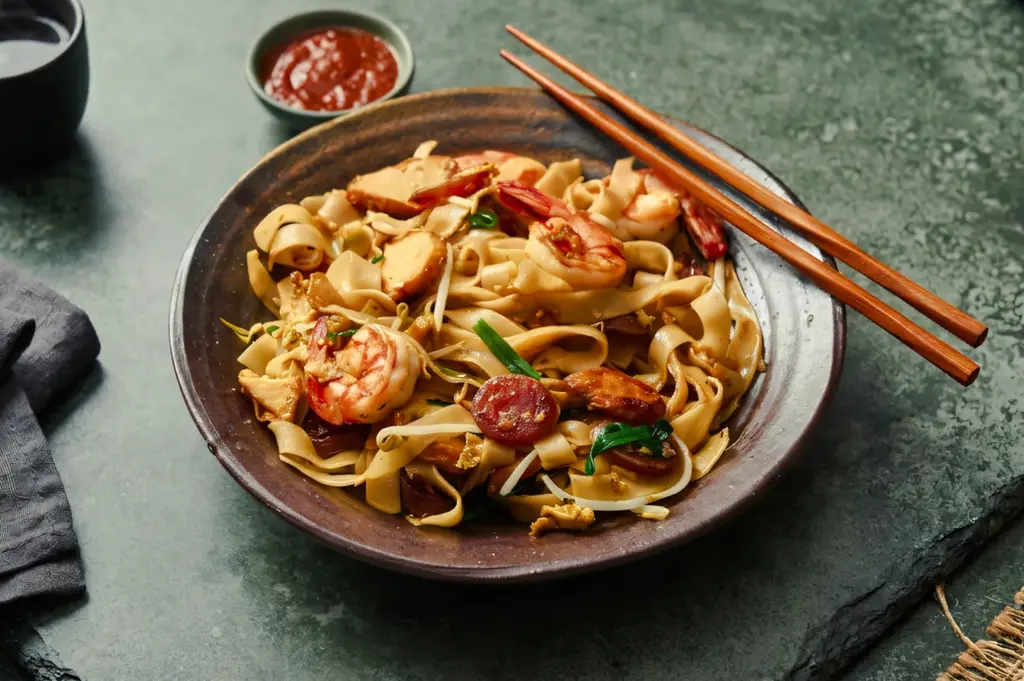
The ingredient list also shifts to reflect local hawker traditions. While you will still find blood cockles and bean sprouts, a classic Singapore plate almost always features slices of sweet Chinese sausage, known as lap cheong, and springy fish cake. Many hawker stalls in Singapore also mix the flat rice noodles with yellow wheat noodles to create a satisfying contrast in texture. The egg used is almost always a standard chicken egg, scrambled directly into the noodles to soak up the rich, dark soy sauce.
The resulting flavor profile is a complex dance of sweet, salty, and spicy notes. It is a heavier, more comforting interpretation of the dish that perfectly suits the bustling energy of a local hawker centre.
Technique and Identity in the Wok
At their core, both variations rely on mastery of temperature and timing. A good wok hei is non-negotiable. If the wok is not hot enough, the noodles boil in their own moisture, resulting in a soggy mess. If it is too hot and the cook is too slow, the delicate fresh noodles will burn.
Here are some techniques or reminders to make the best char kway teow (things I gathered from visiting a lot of char kway teow shops!):
- The cooks must start cooking with precision.
- They drop a small handful of ingredients into the wok in a highly specific sequence.
- Minced garlic and pork lard go first to build the aromatic base.
- The noodles follow, absorbing the fat. The sauces are splashed in, caramelizing instantly.
- Proteins like chicken, pork, or cockles are added just long enough to cook through.
- Finally, a toss of chives or green onions finishes the dish before it is transferred to a serving plate. You must serve immediately to capture the peak texture of the noodles.
These variations in technique and flavor highlight the unique food cultures of both regions.
Penang favors a purist, ingredient-driven approach where the freshness of the seafood and the intense heat of the wok take center stage. S
ingapore embraces a more complex, layered flavor profile, blending sweet and savory elements into a hearty, deeply satisfying comfort food.
Navigating the Hawker Stalls
Finding a great plate requires knowing what to look for and how to order. When visiting a famous spot like Hill Street in Singapore or a renowned stall in Penang, observation is your best tool. Look for a cook who prepares the dish one or two plates at a time. Bulk cooking ruins the texture and prevents the development of proper wok hei.
When you step up to order, you have options. You can adjust the spice level to suit your palate. If you want to cut through the richness, ask for extra vegetables like chye sim or extra bean sprouts. Some diners prefer their noodles a tad dry, while others love a saucier finish. If you are not a fan of the metallic taste of blood cockles, simply ask the vendor to leave them out.
A Shared Culinary Heritage
Ultimately, I’d say that declaring one style better than the other misses the point of regional cuisine. Penang char kway teow offers a masterclass in savory wok technique and fresh seafood, while Singapore char kway teow provides a deeply comforting, sweet and savory depth that is entirely its own.
Both versions require immense skill, a blazing hot wok, and a deep respect for tradition. Exploring these differences is not about finding a winner.
It is about tasting the rich, evolving history of Asian street food, one perfect plate at a time.