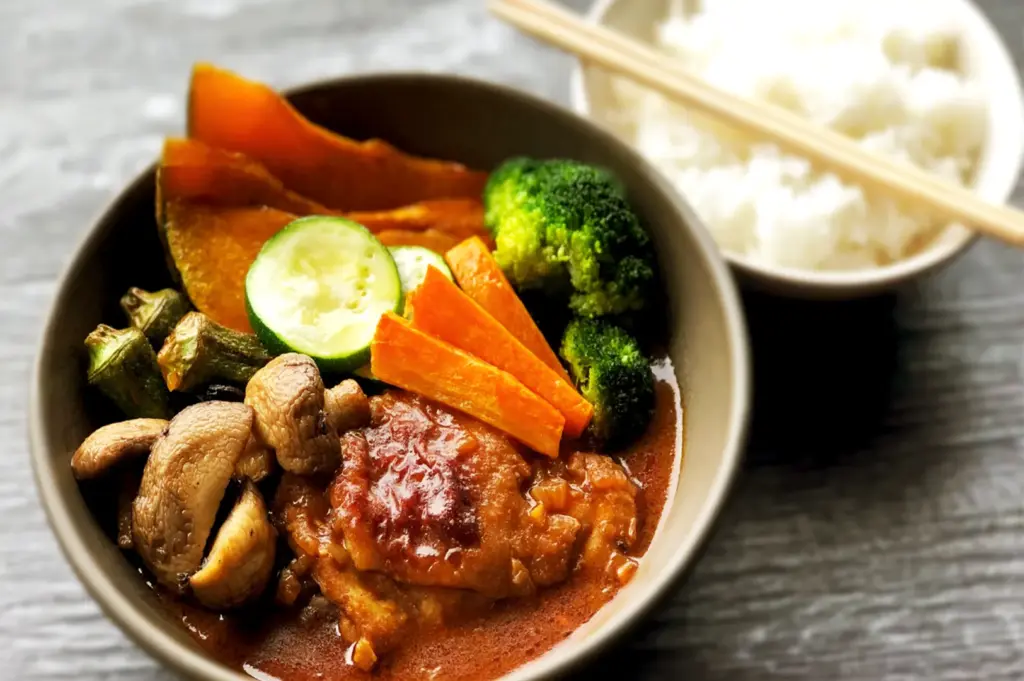
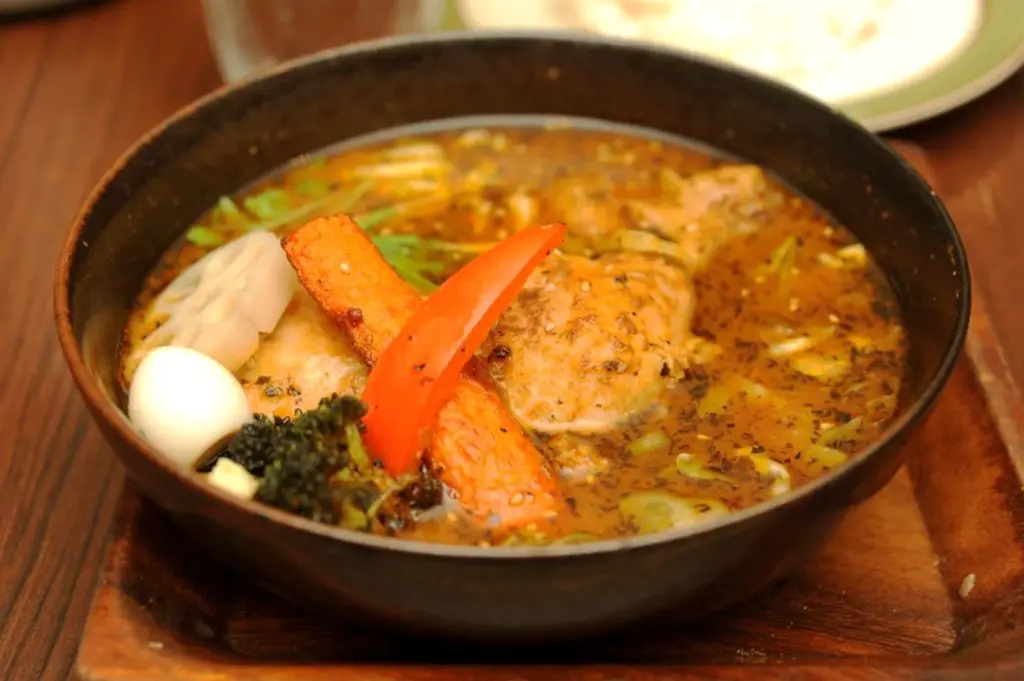
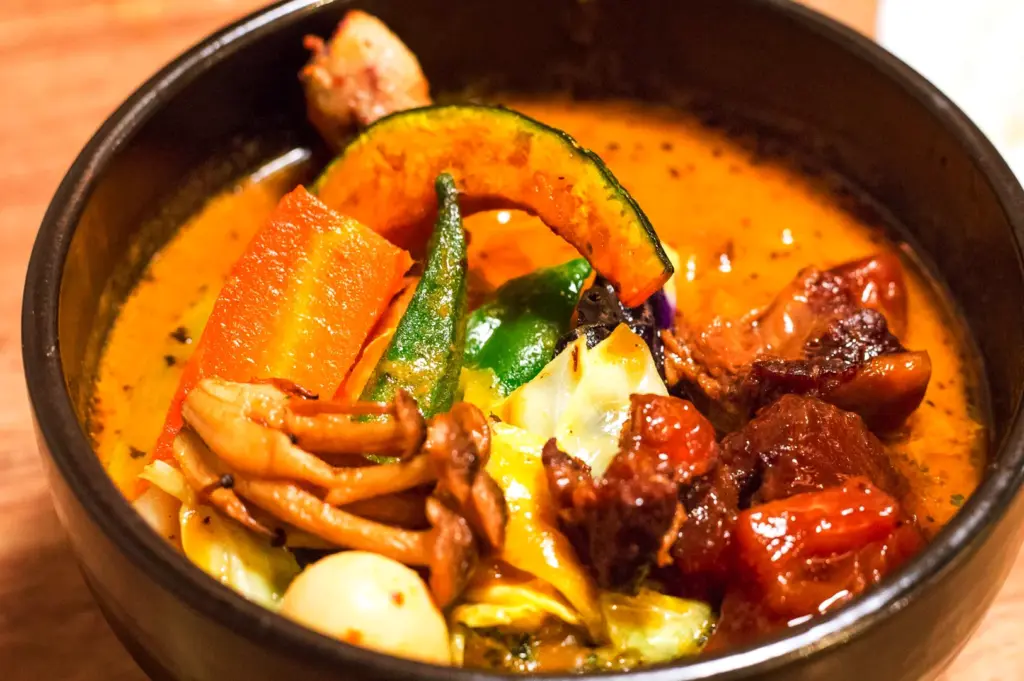
Rainy afternoons in Japan made me crave warmth, but not the kind that knocks you out. One damp day on my trip up to Hokkaido, I ducked into a small shop and met the bowl that changed my idea of “curry”: Japanese soup curry, a steaming, spice-bright broth served with rice on the side, so I could decide how rich each bite would be.
What Japanese Soup Curry Is (and Isn’t)
Before that trip, I assumed soup curry was just “Japanese curry with extra water.” It isn’t. What I ate in Sapporo felt like its own thing, a Hokkaido invention that took off in the 1970s, made for cold weather and serious vegetables.
Back home, I knew Japanese curry rice as thick and glossy, built on a roux that clings to rice on one plate. Soup curry flipped that: the base was broth-first, fragrant and fully spoonable, and the rice arrived separately.
Thin didn’t mean weak. The broth had depth without the heaviness, spices that opened gradually, warming my throat instead of hitting all at once.
What I Ordered (My Simple First-Timer Move)
When I saw the menu, I did what I always do when I’m traveling and unsure: I chose the shop’s classic. A chicken leg soup curry felt like the safest entry point, and I went with a medium spice level.
The chicken was tender enough to pull apart with a spoon, and the skin carried a slick of spice oil that perfumed the whole bowl. I added an egg, and the yolk did exactly what I hoped, it rounded out the broth, making each spoonful feel smoother and more luxurious.
And I kept the rice on the side the whole time. That one detail made the meal feel interactive, in a quiet, comforting way.
The Vegetables Were the Architecture
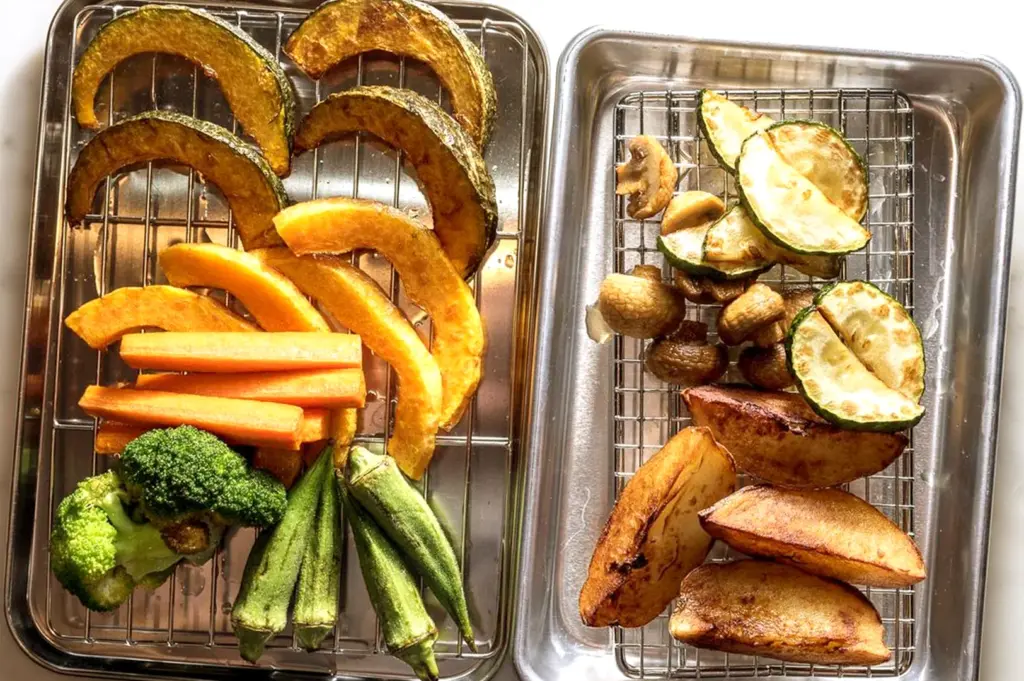
What surprised me most in Japan wasn’t the chicken, it was the vegetables. Soup curry is defined by big-cut produce that keeps its shape and personality. The vegetables in my bowl tasted like they’d been cooked with intention (some felt flash-fried before hitting the broth), so nothing turned mushy.
Pumpkin brought sweetness and a little natural body. Lotus root gave me that crisp snap against soft chicken. Broccoli held onto spice in its crown. Carrot sweetened the broth as I ate. Okra finished green and slick.
The bowl changed as I went. Early spoons tasted brighter and sharper; later ones felt deeper, like the vegetables had slowly melted their sugars and aromas into the broth. That evolution was the charm.
How I Ate It (Without Overthinking)
I started by dipping, a spoonful of rice into the curry, then straight to my mouth. It let me control intensity bite by bite. When I wanted more comfort, I spooned a little broth over the rice, then went back to dipping again.
I learned to slow down. Soup curry rewarded patience: flavors kept unfolding as the chicken broke down and the vegetables continued to season the broth.
Why It Stayed With Me After the Trip
Japan already knows how to do broth comfort, ramen counters on cold nights, hot bowls that warm your hands as much as your stomach. Soup curry felt like that same instinct, translated into spice.
What I loved was the comfort without the sleepy weight of thick roux, the kind of bowl I’d happily chase again as an Asia Food Fanatic. Even after a full bowl, I felt warmed, not worn out.
Would I Have It Again?
For me, the best soup curry is judged by how it finishes: aromatic at the first sip, deeper by the middle, and still drinkable at the end. The spice should linger gently, not overwhelm.
Yes, I’d seek it out again, especially when the vegetables feel intentional and the broth keeps changing as the bowl disappears. That final spoonful, with the rice gone and the broth tasting somehow clearer and deeper at once, was the bowl delivering exactly what it promised.